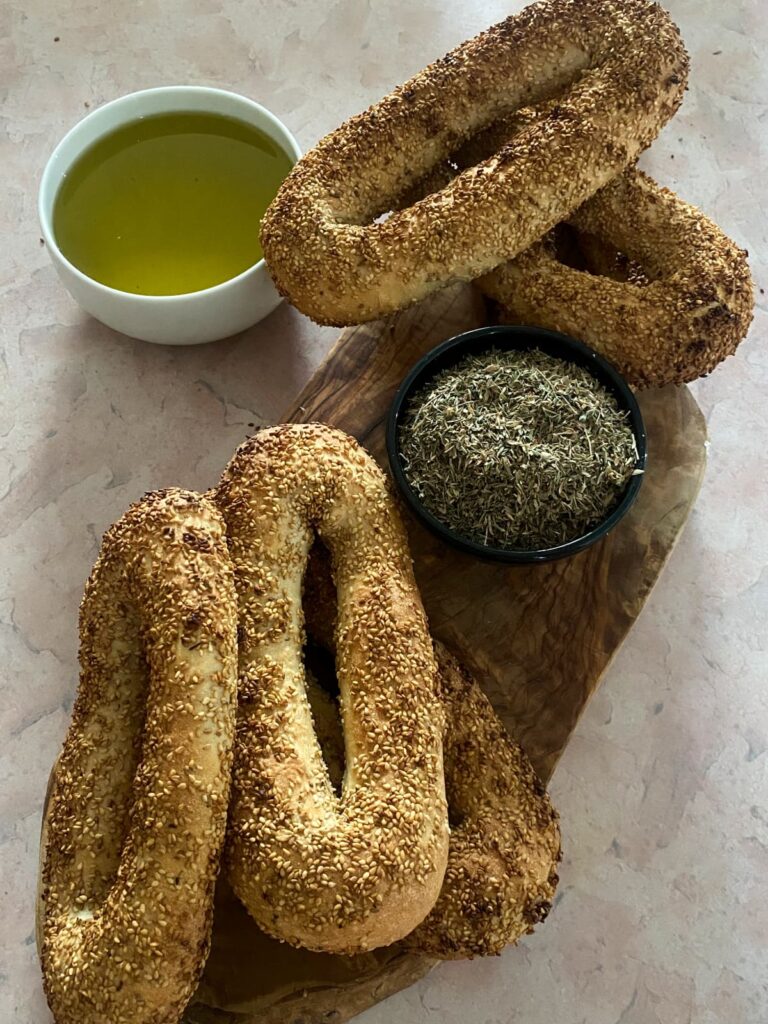
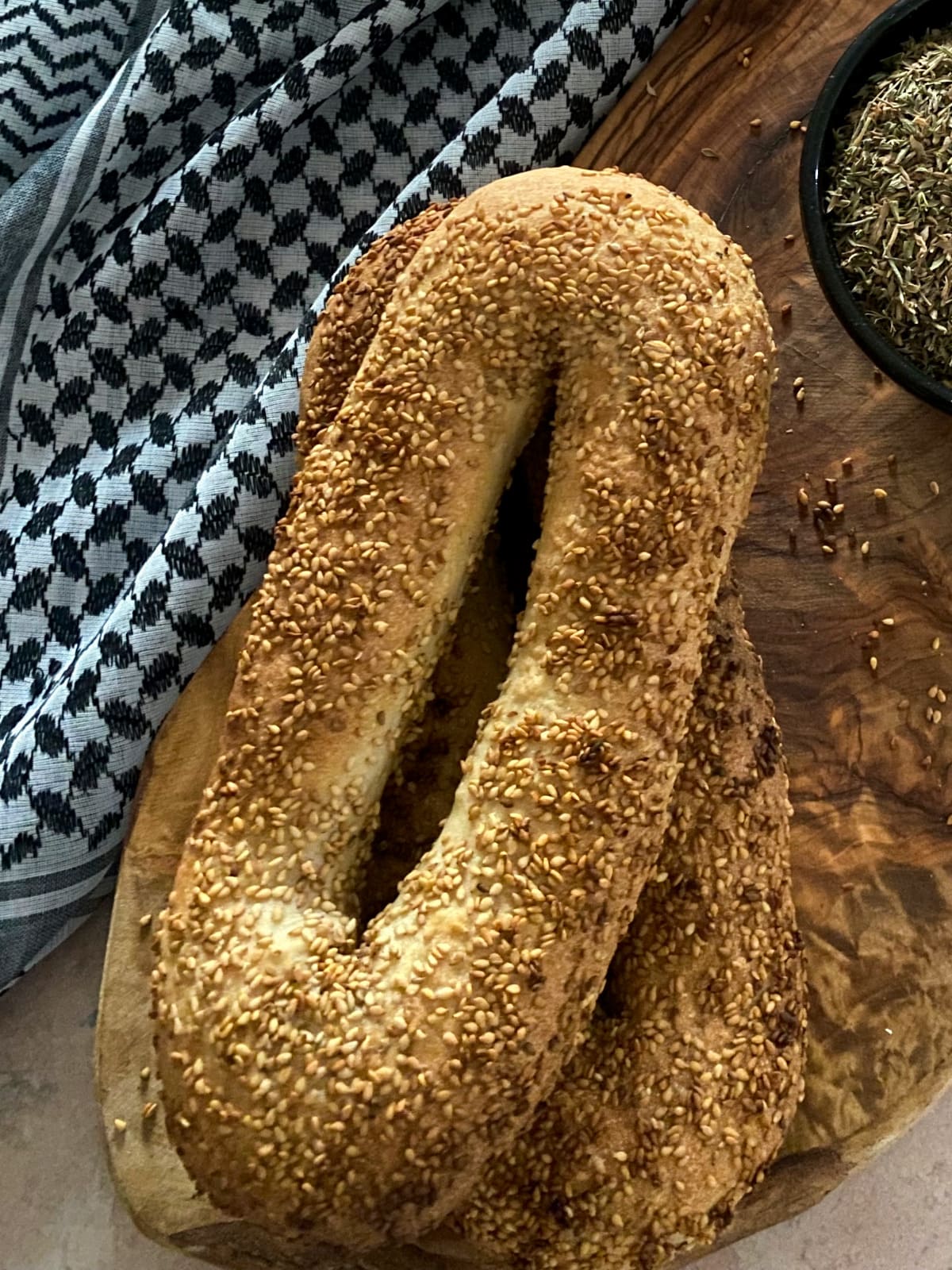
These Jerusalem bagels feature a soft, airy crumb and a thin, crisp crust coated in toasted sesame seeds for a nutty crunch. The dough is incredibly simple to work with—unlike traditional bagels, there’s no boiling required. Just knead, rise, shape, and bake.
This post may contain affiliate links. Read our disclosure policy.
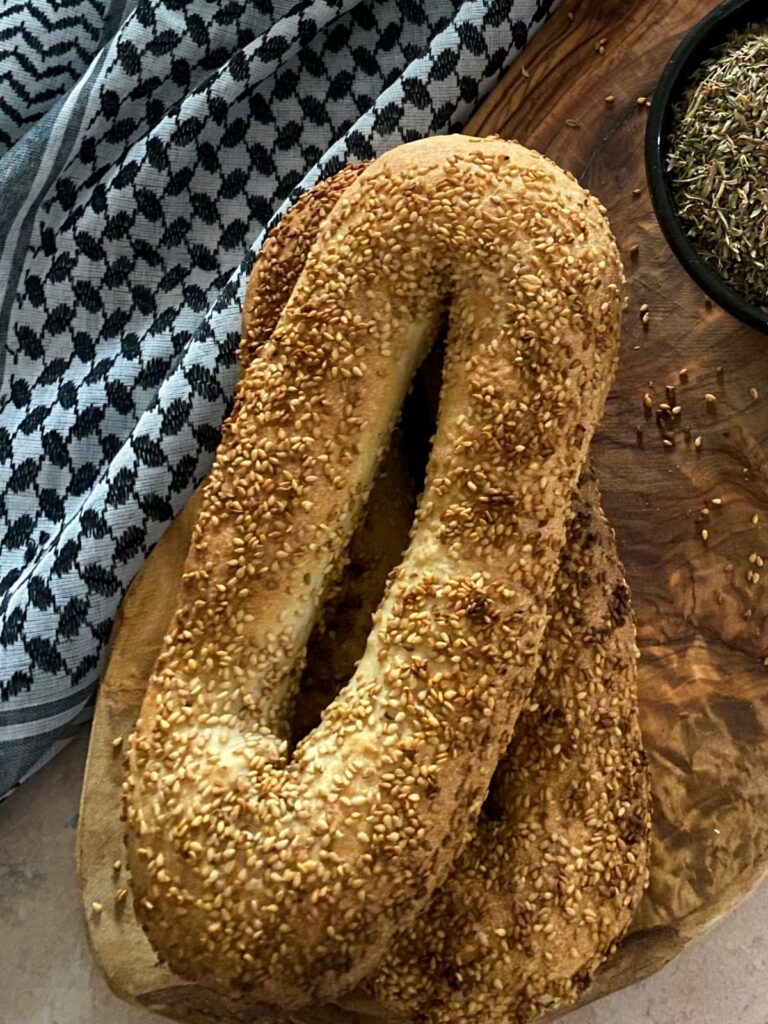
What is a Jerusalem Bagel?
When you read more about the Jerusalem bagel, you discover that its name in Palestinian is kaak al-Quds, meaning Jerusalem cake, but when you look at the ingredients of its dough, and how it is made, you realize that it is a type of bread that dates back to the Ottoman period and is mostly inspired by Turkish simit.
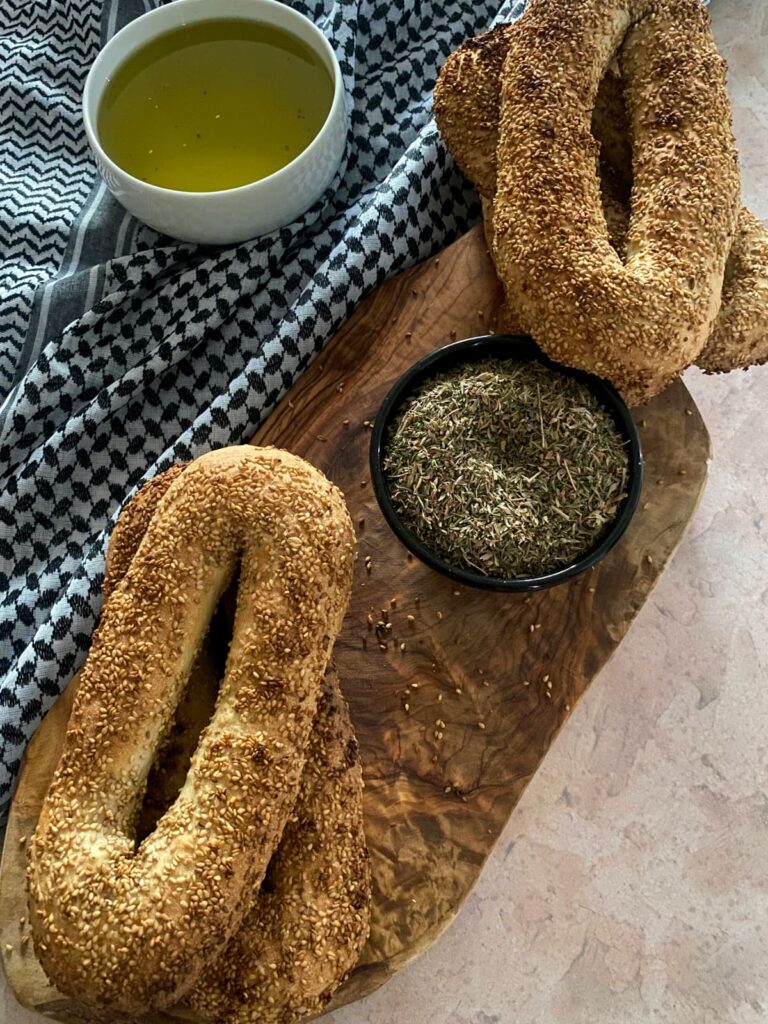
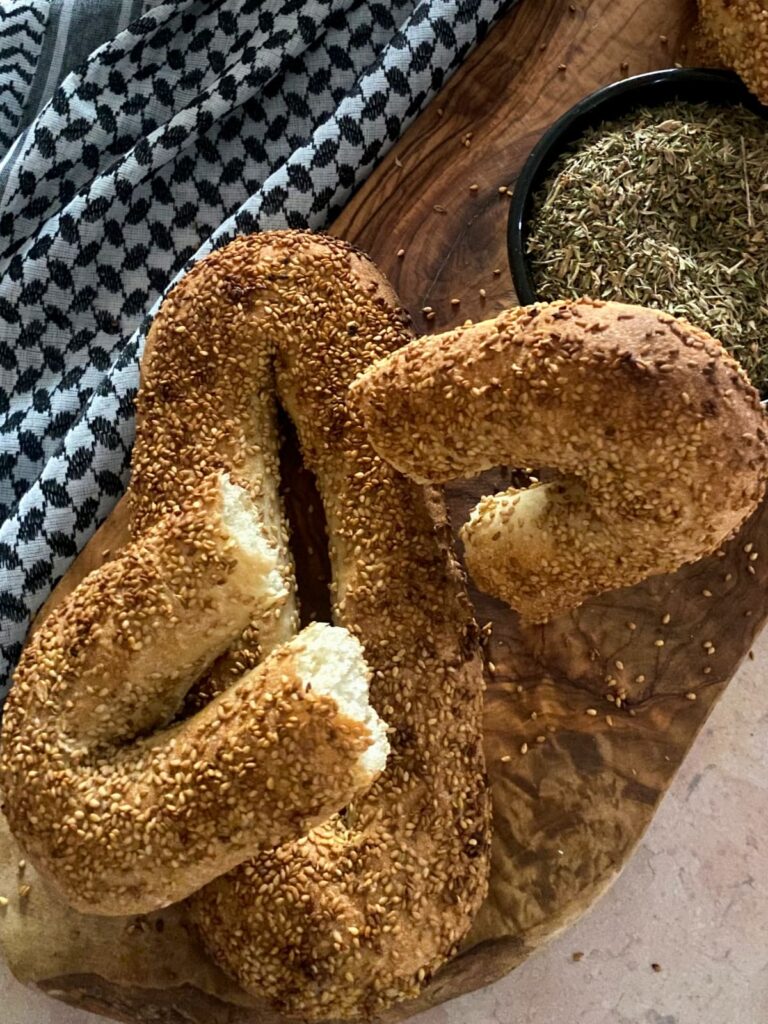
Jerusalem bagel is characterized by its unique oval shape and crispy crust, and is traditionally baked in olive wood ovens, leading Jerusalemites to believe that the taste of Jerusalem bread cannot be copied or imitated anywhere else, and that the secret lies in the traditional ovens of the Old City of Jerusalem. Regardless of the legend, these sesame-crusted delights are a daily ritual, traditionally enjoyed dipped in olive oil, dusted with za’atar, or served alongside Chickpea Falafel.
Ingredients You’ll Need
- Prepared as traditional calls
- Made from ingredients that are already in your hands
- Can be made with mixer or by hand
- Soft, airy crumb with thin, crisp crust
- Make-ahead & freeze friendly
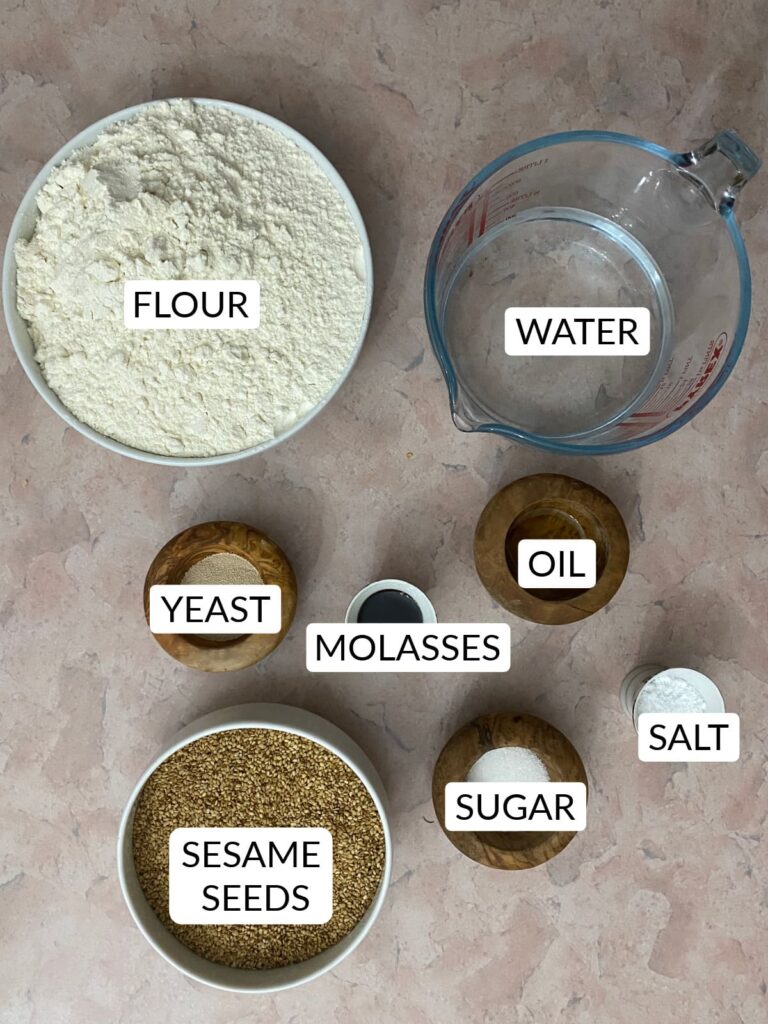
- Water: You’ll need warm water, warmed to about 110°F (43°C), to activate the yeast before combining your ingredients. Make sure you don’t use hot water, as you risk killing the yeast. To check its temperature, it’s best to use an instant-read thermometer. If you don’t have one, dip your finger in the warmed water; if it feels uncomfortably hot, wait a moment. If the water feels pleasantly warm and you can comfortably keep your finger in it, you’re ready to add the yeast and sugar.
- Yeast: I use instant yeast, but you can also use active dry or fresh yeast. Note that active dry yeast requires a slightly longer rise time, while fresh yeast requires triple the amount of dry yeast below.
- Sugar: Sugar feeds and activates the yeast, tenderizes the dough, and makes the crumbs softer and sweeter. If you prefer, you can also use 1/2 tablespoon of honey as a substitute.
- Oil: Olive oil ensures a rich, flavorful bread. I use extra virgin olive oil for the depth it adds, but you can easily substitute it with vegetable, sunflower, or corn oil at a 1:1 ratio if you prefer a more neutral taste.
- Salt: Use Mediterranean coarse sea salt to get the right flavor.
- Flour: Both bread and all-purpose flour work well here. I lean toward all-purpose flour when I make this Jerusalem bagel recipe because it yields a softer crumb, whereas bread flour will give you chewier bagels.
You’ll also need equal amounts of molasses and water, and 1 cup of sesame bagels for toppings.
Step-by-Step Photos: How to Make this Jerusalem Bagel Recipe
Start by activating the yeast by whisking it with warm water and sugar. Let rest for 10-15 minutes until foamy and bubbly. I usually do this step even if I’m using active dry yeast, just to make sure the yeast is alive and ready to rise my bagel dough.
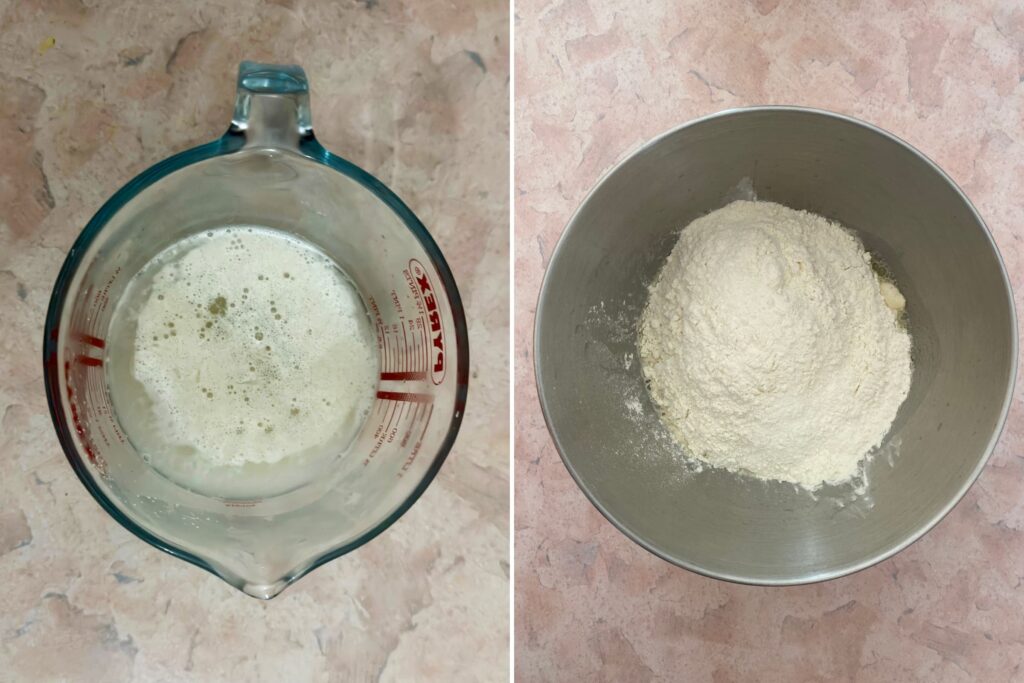
When the yeast mixture is ready, add the rest of the dough ingredients (oil, salt, flour), and combine with a stand mixer fitted with the dough hook for 4 minutes. Then, increase the mixer speed to medium and knead for 8 minutes until the dough becomes smooth and elastic.
If you don’t own a stand mixer, you can combine all the ingredients in a large bowl with a spatula or dough whisk, then transfer the dough to a lightly floured surface and knead it by hand. The dough should feel slightly tacky after the kneading process.
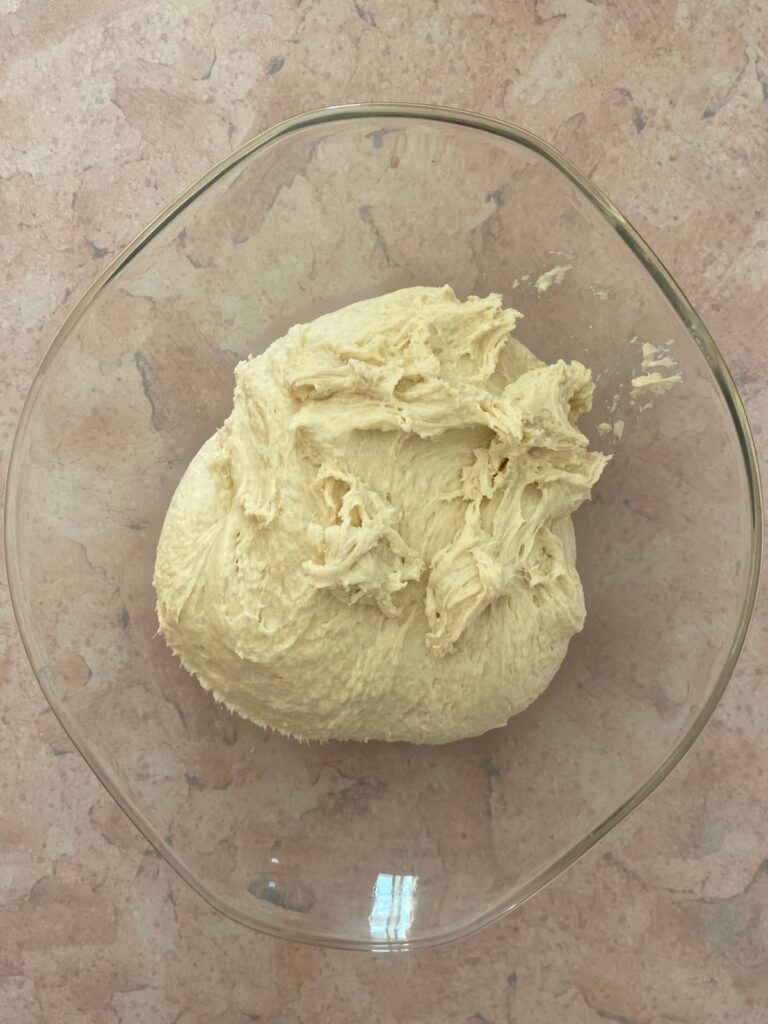
This is what your dough should look like right after kneading. I took this photo before shaping the dough into a ball and its 1st rise to give you a clear sense of the texture you’re looking for:
The Easy Way to Shape These Bagels
Once the dough has doubled in size, punch it down to release any air bubbles. Shape it into a smooth ball again, then divide it into six equal pieces. Using a kitchen scale is very helpful here for dividing the dough evenly. Each piece of Jerusalem bagel dough weighs approximately 140 grams.
Shape each into a ball, cover, and let them rest for 15 minutes.
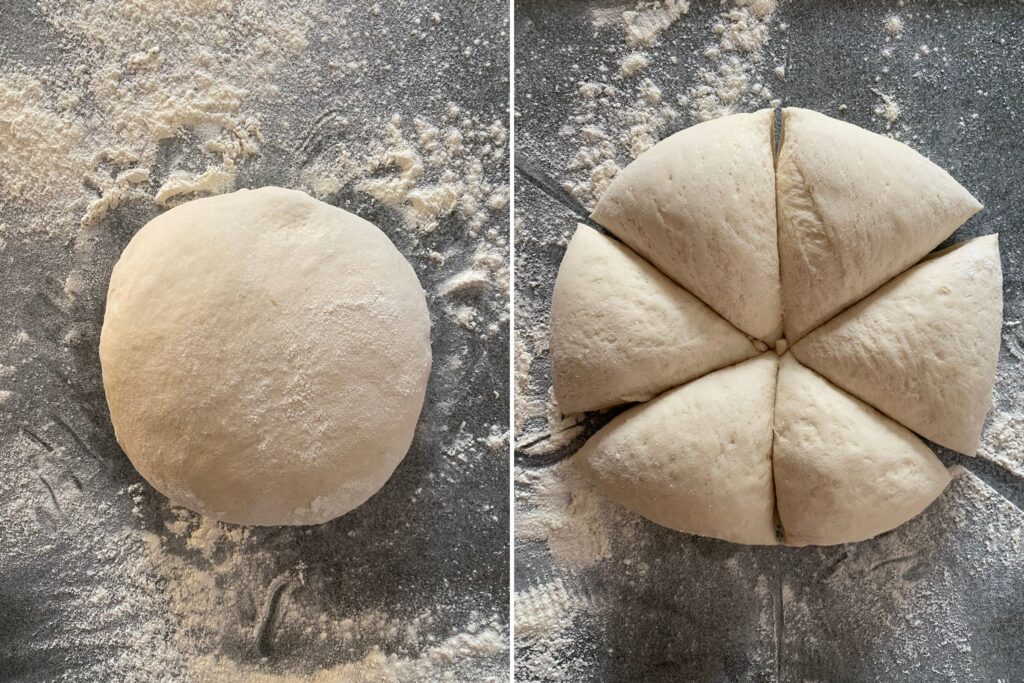
Press your thumb in the center of the ball to create a hole, then, using your index fingers, twirl the dough with gentle outward pressure to enlarge the hole until you from long, ellipse shape. Place the shaped bagel in the prepared molasses mixture bowl, then transfer it to the prepared sesame seeds to coat all sides.
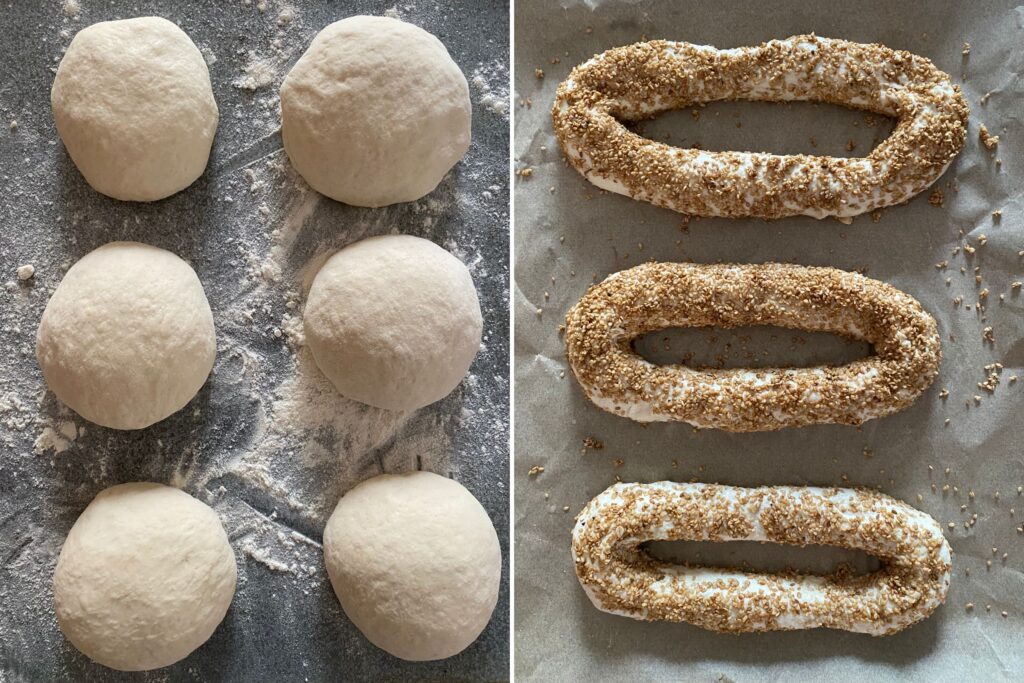
Place three shaped bagels onto each of the two prepared baking sheets. Take a moment to ensure they have kept their perfect oval shape, as they can easily stretch or warp while being dipped in the molasses mixture and sesame seeds. Let the bagels rise for 15 to 30 minutes.
Bake in a preheated oven for 15 minutes, until deep golden brown.
5 Success Tips
- Check the expiration date of the yeast before you begin. To ensure it is active, rehydrate it by whisking it with sugar in warm water, even if you are using instant dry yeast.
- Use a kitchen scale to measure your ingredients, rather than volume measurements. It is far more accurate and ensures you get more reliably delicious results.
- Prepare and knead the dough in an stand mixer. While I tried and explained how to make ka’ak al quds dough by hand, using an electric mixer makes the process much easier for you.
- Use unroasted sesame seeds to ensure the best nutty taste. If you only have roasted seeds, you can use them, but keep in mind that they may have a burnt taste.
- Bake the bagels one sheet at a time to ensure the best crust. If you try to bake both sheets together, they may brown unevenly, as the top sheet will often bake much faster than the bottom one.
FAQs
What is the difference between a Jerusalem bagel and a regular bagel?
While both are made from lean dough, standard bagels, like New York style, are made from drier dough and boiled before baking to create that soft and chewy inside with a perfectly golden, flaky crust. Jerusalem bagels, made from softer dough, skip the boiling process entirely and are shaped in an elongated and oval shape, rather than perfectly round, which results in a much lighter, airier, and softer crumb.
How should Jerusalem bagels be served?
These bagels are best eaten warm, with za’atar, olive oil, hummus, labneh, or muhammara. But they can also be served with boiled eggs, fresh tomatoes, and falafel for an authentic Palestinian breakfast.
How to store Jerusalem bagels?
Jerusalem bagels are best eaten on the day they are baked. However, if you have some leftovers, store them in an airtight container at room temperature for up to two days. You can also freeze them once they have cooled by wrapping them tightly in plastic wrap and placing them in a freezer bag for up to three months.
Made this recipe? Share your baking adventure and let me know how it turn by leaving a ★★★★★ star rating and a review below. Be sure to follow me on Pinterest, Facebook, YouTube, and Instagram, and don’t forget to subscribe to my free newsletter!
Jerusalem Bagel (Kaak Al Quds)
Ingredients
Dough
- 1 and ¼ cups (325 g/ml) water, warmed to about 110°F (43°C)
- 2 and ¼ teaspoons (7 grams) instant or active dry yeast
- 1 tablespoon (12 grams) sugar
- 1 tablespoon (14 grams) extra virgin olive oil
- 1 and ½ teaspoons (10 grams) salt
- 4 cups (480 grams) all-purpose flour or bread flour
Toppings
- 1 cup sesame seeds
- 1 and ½ tablespoon molasses
- 1 and ½ tablespoon water
Instructions
- Prepare the dough: Whisk the warm water, yeast, and sugar in a stand mixer bowl or a large mixing bowl. Cover the mixture and let it rest for 10 to 15 minutes until foamy and bubbly on the top.
- Add the olive oil, salt, and flour to the foamy yeast mixture. Using the dough hook attachment, mix on low speed for 4 minutes until the ingredients come together, the dough fully hydrates, and the mass clears the sides of the bowl. Scrape the bottom of the bowl with a spatula to incorporate any remaining dry flour. *If mixing by hand, combine the ingredients in a large bowl using a silicone spatula, wooden spoon, or dough whisk until the dough forms a cohesive, uniform mass.
- Knead the dough: Increase the mixer speed to medium and knead for 8 minutes until the dough becomes smooth and elastic. If kneading by hand, transfer the dough to a lightly floured work surface and knead for 8 minutes . The dough feels slightly tacky or sticks to your fingers after the kneading process, and that is exactly what we want. Poke the dough with your finger: If it slowly bounces back, it is ready to rise. If the hole stays put, keep kneading for another minute.
- 1st Rise: Lightly grease a large bowl with oil or nonstick spray. Use a dough scraper to transfer the dough from the mixer to the oiled bowl. Cover the bowl with a clean kitchen towel or plastic wrap and let it rise for about 60 minutes, or until the dough has doubled in size.
- Spread the sesame seeds on a large platter, shallow tray, or glass baking pan as I do. In a separate wide bowl, whisk the water and molasses together until fully combined. Line two baking sheets with parchment paper. Set aside.
- Shape & Top the bagels: Gently punch down the risen dough to release the air, then transfer to a generously floured work surface. Divide the dough into 6 equal pieces, weighing approximately 5 oz(140g) each. Roll each piece into a smooth ball. Arrange the dough balls on your work surface, cover with a clean kitchen towel, and let rest for 15 minutes.
- Work with one dough ball at a time, keeping the remaining pieces covered to prevent them from drying out. Press your thumb into the center of the ball to create a hole. Using your index fingers, twirl the dough with gentle outward pressure to enlarge the hole. Stretch the dough carefully until it forms the signature long, elliptical shape of a Jerusalem bagel.
- Dip the shaped dough into the molasses mixture, flipping to ensure both sides are fully wet. Transfer the dough immediately to the sesame seed platter, coating both sides generously until the seeds stick to the entire surface. Place the bagel onto the prepared baking sheet—three bagels per sheet. Repeat the process for the remaining dough balls.
- 2nd Rise: Cover the two baking sheets with a kitchen towel. Let the bagels rise for 15 to 30 minutes.
- Preheat the oven to 430°F (220°C).
- Bake: Spray the Jerusalem sesame Bagels with water. Bake for 15 minutes until they reach a rich, golden brown (Tip: Bake the bagels one sheet at a time and in the lower third of the oven for best results). If the tops begin to darken too quickly, tent them loosely with foil at the halfway mark to ensure the crust bakes evenly without burning.
- Jerusalem bagels are best enjoyed fresh. Store leftovers in an airtight container at room temperature for up to 2 days.