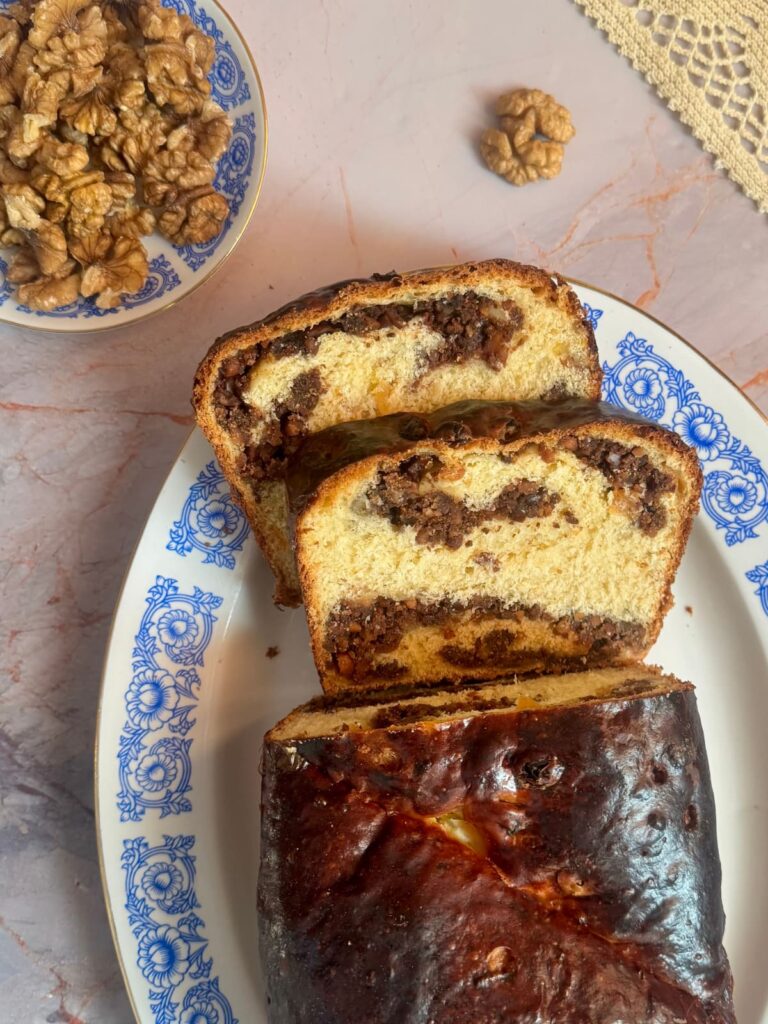
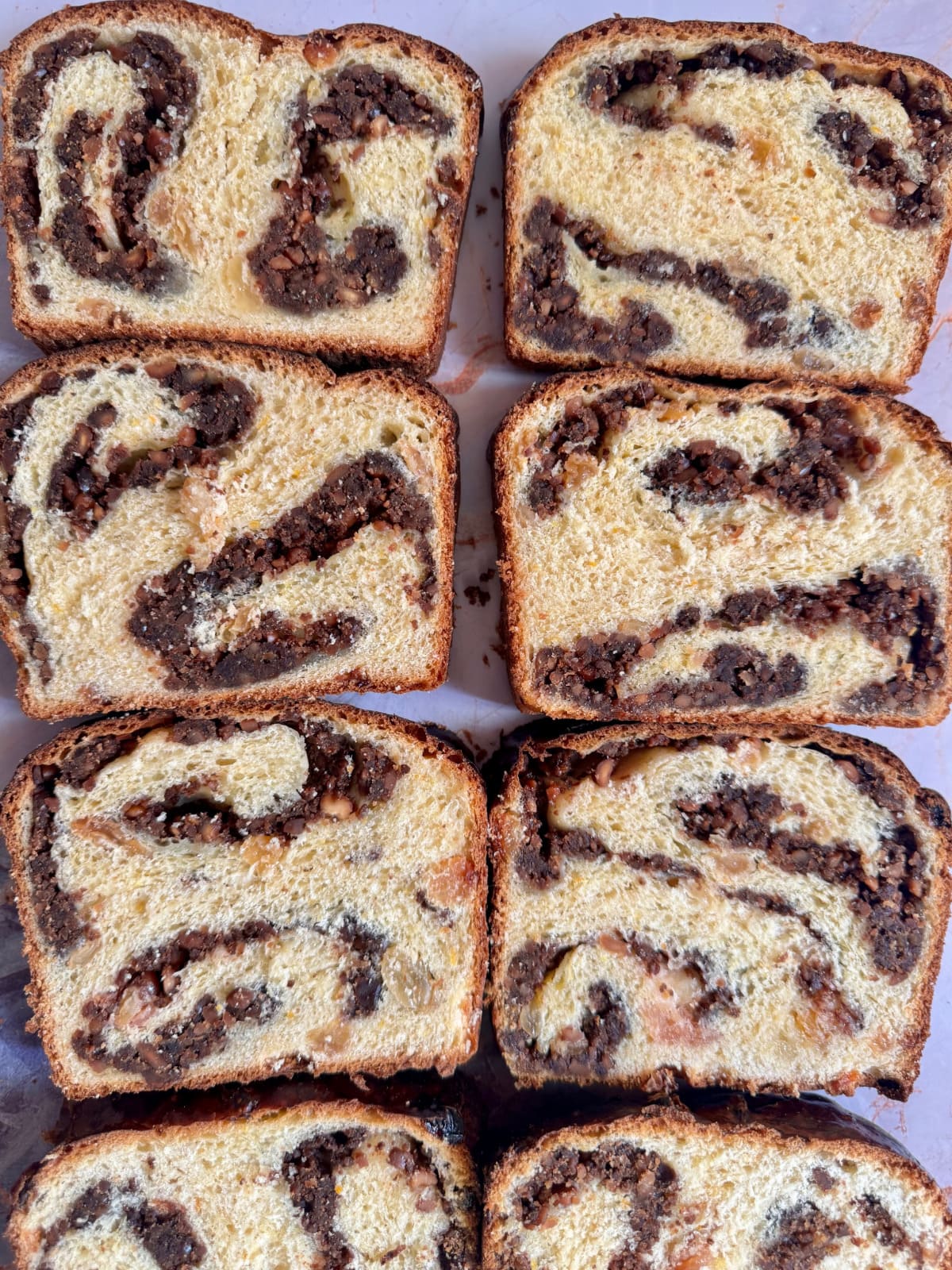
This fresh, festive, and traditional Romanian Cozonac starts with a soft, rich dough and a classic walnut filling, which can be swapped for any of the variations mentioned below. Like my Norwegian Christmas bread recipe, today’s sweet bread is make-ahead friendly. The result is a soft, pillowy crumb like French brioche, but even richer, with a stunning dark walnut swirl.
This post may contain affiliate links. Read our disclosure policy.
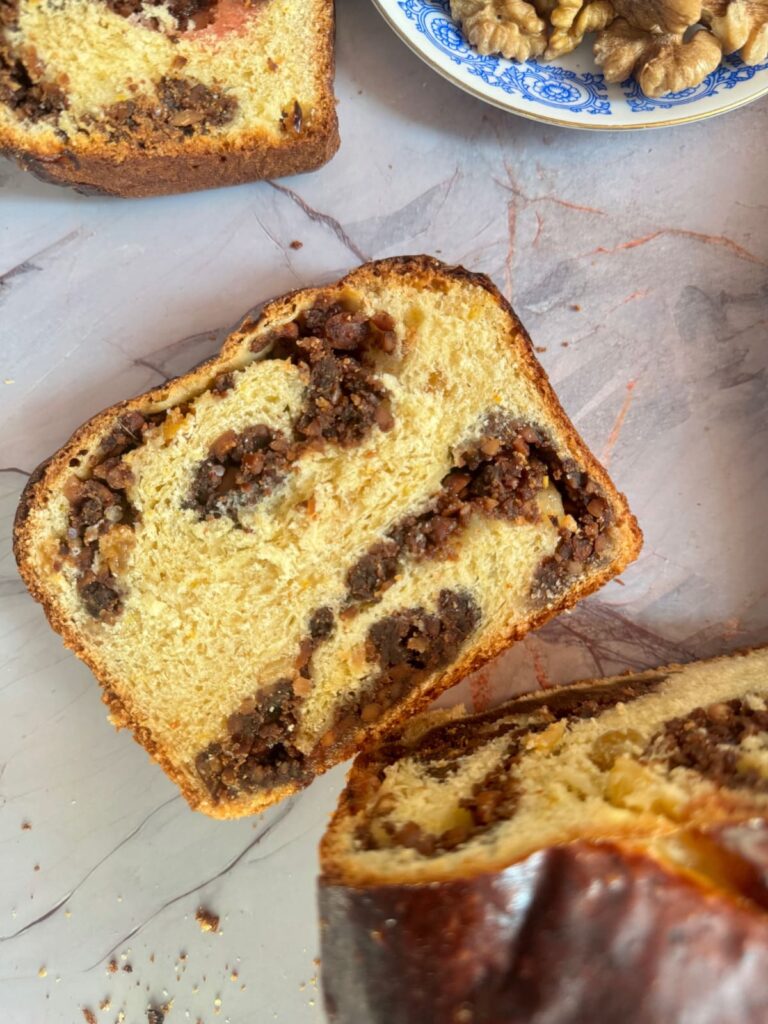
When it comes to breads made from enriched dough, flaky, shreddy breads are wonderful, and rich, cake-like loaves have their own charm—but there is a certain magical category of Christmas and Easter breads that perfectly bridges the gap between the two. Think of feathery, vertical shreds of a Panettone, aromatic, stringy pull of a Greek Tsoureki, and the deep, earthy nuttiness of Povitica.
Today’s yeast bread fits perfectly into that category. The rich dough is infused with lemon and orange zest; just like my Chelsea buns, these bright, aromatic notes provide a counterpoint to the buttery richness, creating a vibrant and balanced flavor. Perfect for holiday parties with a glass of bold red wine, or dipped into warm milk or coffee for breakfast.
And the best part? It stays soft for days.
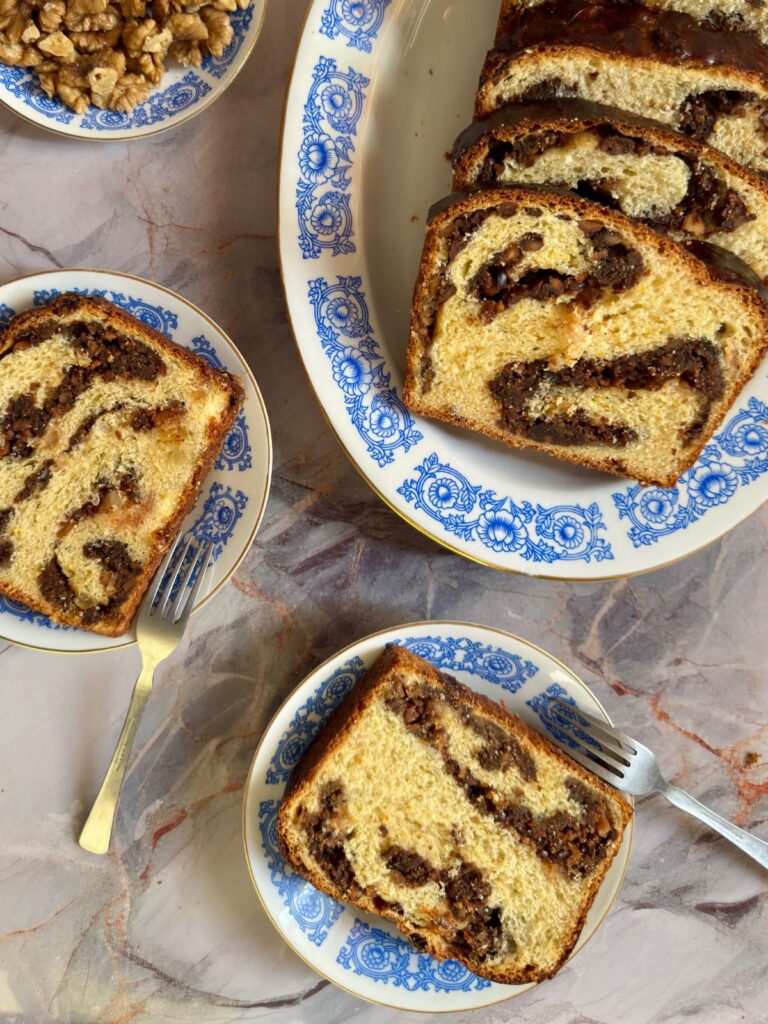
What Is Cozonac?
Cozonac has a rich history that is as layered as the bread itself. As I worked on today’s recipe, I read more and learned that it is a staple of Romanian and Balkan traditions, tracing back to the early 1700s. It begins with a sweet yeast dough, enriched and infused with orange and lemon peel, then rolled out to include a delicious filling. Traditional Romanian sweet bread versions use a blend of cocoa, walnut, or poppy seed, and often Turkish delight. Bulgarian Cozonac is often on the plainer side, frequently featuring a much simpler filling or no filling at all.
For today’s recipe, I’ve stayed true to the Romanian version, and to achieve its signature shreddy pull and melting richness, you’ll need a high-fat dough and a generous nutty filling. However, if you’re not in the mood to make the traditional filling from scratch, you can easily do what I did with my star bread—spread a layer of Nutella and then sprinkle your favorite nuts on top. It’s a delicious shortcut that still feels incredibly festive.
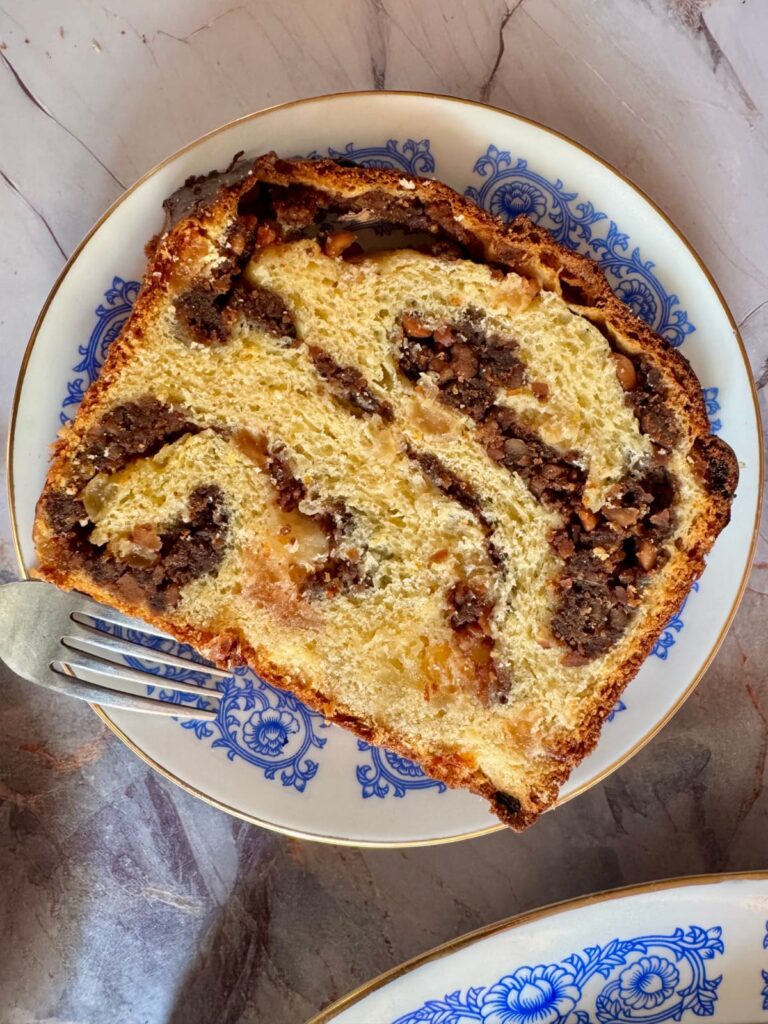
Detailed Overview: How to Make the Cozonac
The full recipe is detailed below, but let me walk you through the process to get a feel for each step before you begin.
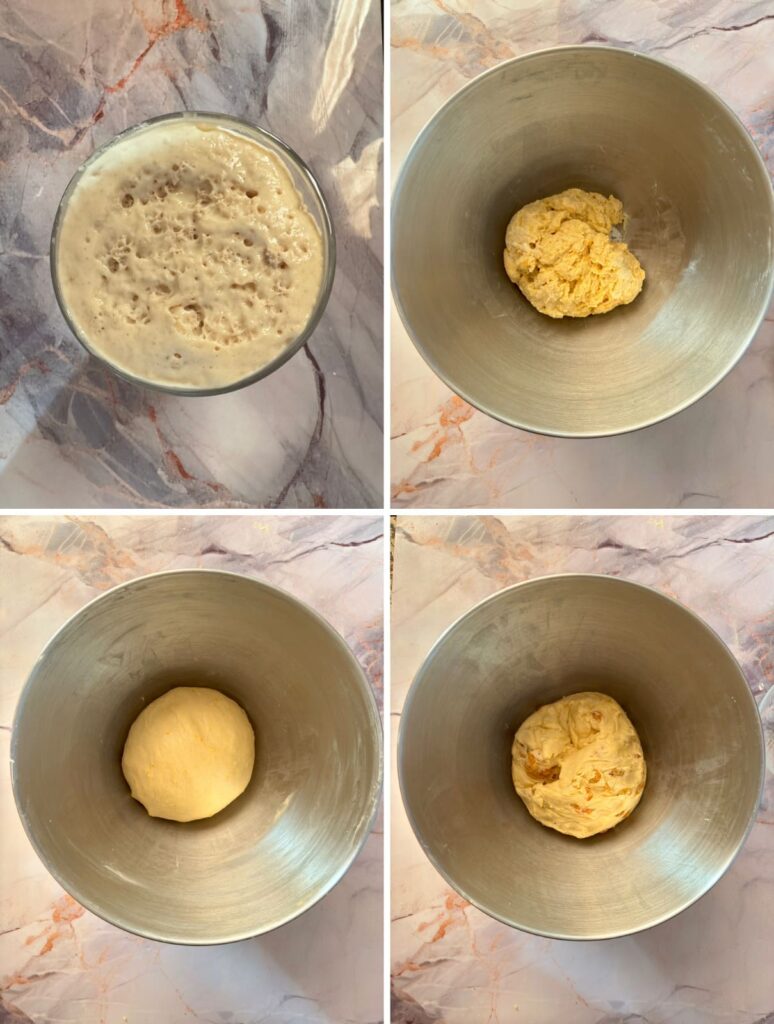
- Sponge starter: You need 1/4 cup of warmed milk, 1/4 cup of flour, and yeast. Why the sponge? In rich dough like this, the high amount of fat and sugar dehydrates yeast cells and slows them down. By creating a sponge first, you allow the yeast to multiply and become strong in a lighter environment before those heavy fats and sugars are added. This ensures a powerful rise and a much fluffier texture.
- The dough: Once your sponge is bubbly and active, you’ll combine it with the rest of the ingredients: milk, lemon and orange zest, egg yolks, salt, sugar, flour, and butter. We use only egg yolks here to create the richest, most velvety dough possible, but we aren’t wasting the egg whites—we’ll use them to make the filling. Initially, the dough will look a little shaggy, lumpy, and tacky, but don’t be tempted to add extra flour! It is best to use a stand mixer to knead the dough until it is smooth and elastic, adding the butter gradually only after the gluten has developed, followed by the raisins. If you want to dive deeper into the science of this technique, you can read this article on how to master enriched doughs like Cozonac.
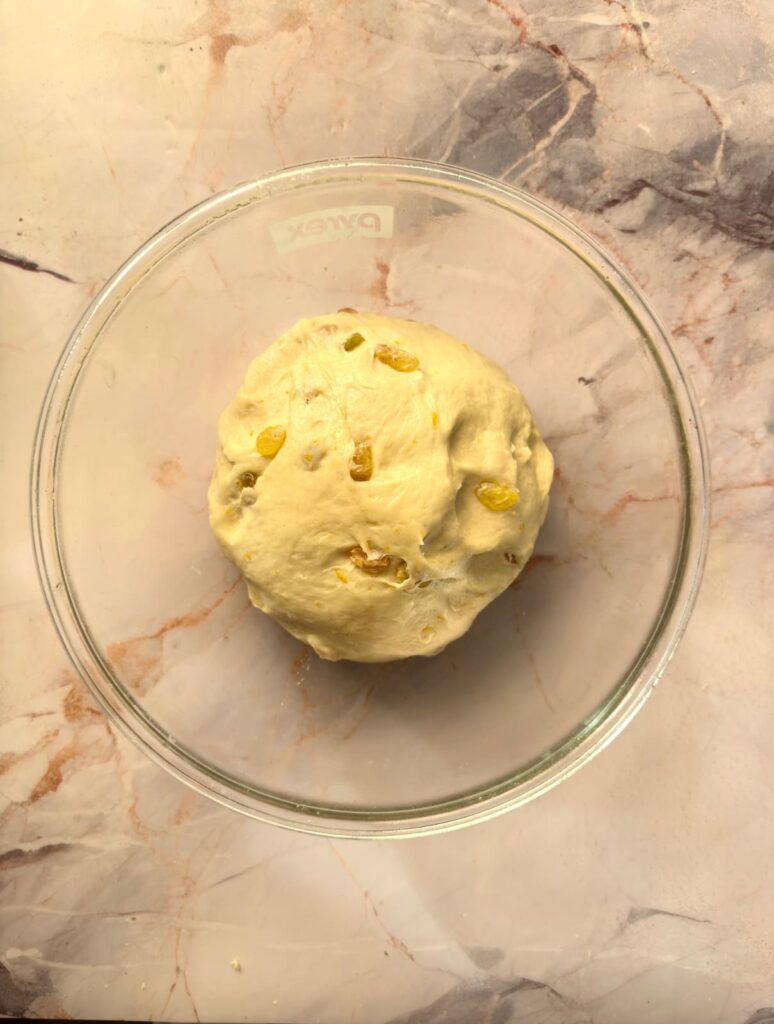
- Chilling time: Place the prepared dough in the refrigerator for at least 2 hours. Because this dough is so rich in fat, chilling makes it much easier to roll out and spread the filling without it becoming too sticky. In addition, this cold fermentation period allows the yeast to work slowly, breaking down starches into complex sugars and organic acids. This results in a much deeper, more nuanced flavor and a better overall texture in the finished bread.
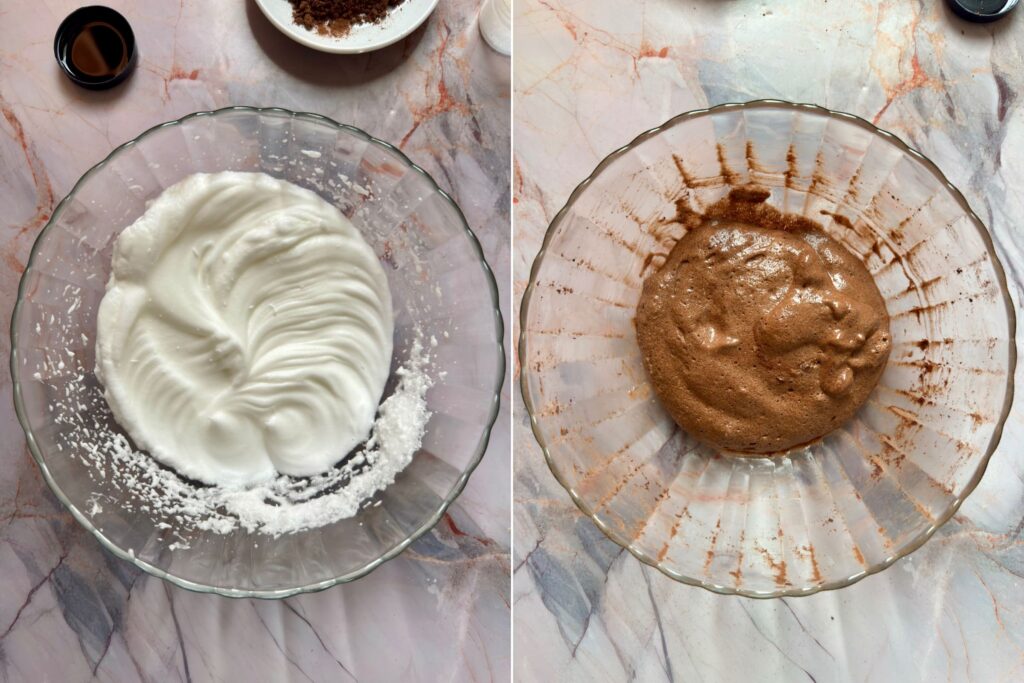
- The filling: Start by beating 3 egg whites with a hand mixer until glossy and stiff peaks form. Next, incorporate the vanilla (or rum/brandy), salt, cocoa, and confectioners’ sugar. Finally, stir in a mixture of peanuts and walnuts. The filling should be thick and chunky. Be sure to set your third egg yolks aside for the bread wash!
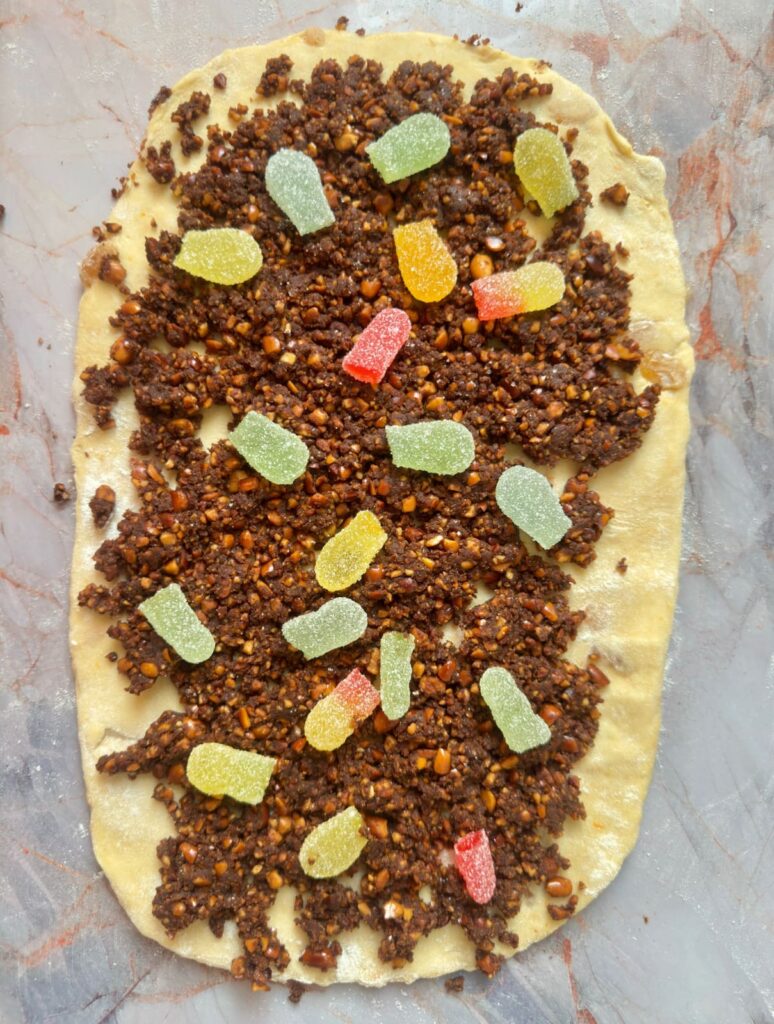
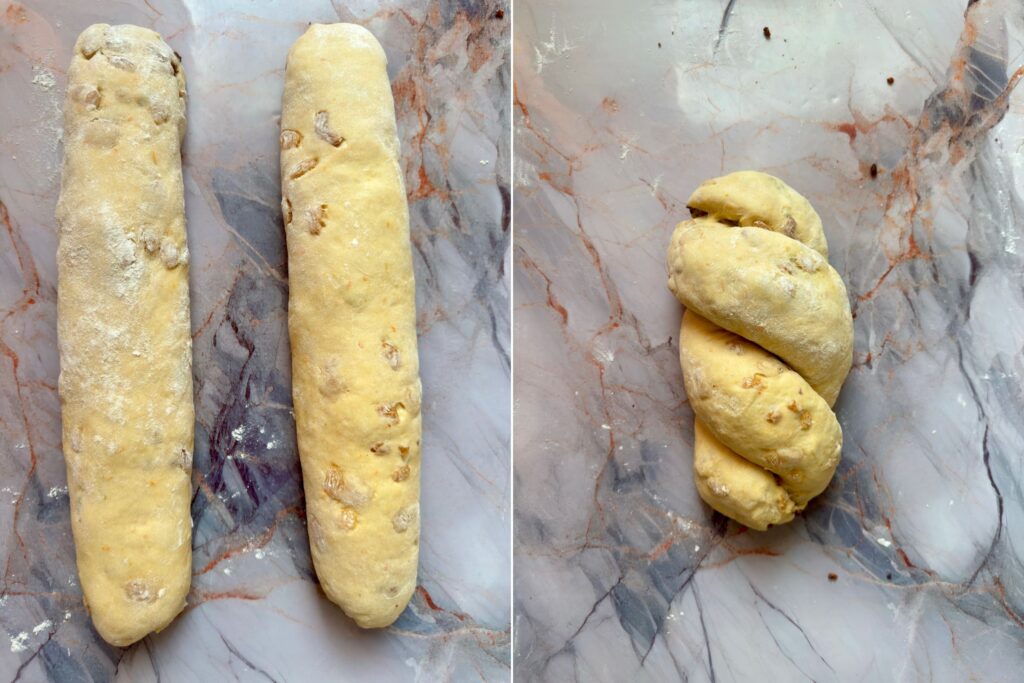
- Shape the cozonac dough: As mentioned in the printable recipe, divide the dough into two equal pieces. Roll each piece into a 9×13 inch (22×33 cm) rectangle. Gently spread the walnut filling over the dough, then sprinkle with the Turkish delight. Starting from the long side, roll each piece into a 13-inch log, pinching the seams and ends tightly to seal. Place one log over the other to form an “X” at the center. Carefully wind the logs around each other toward both ends to create a thick, braided rope. Pinch the ends together and place the loaf into your prepared pan.
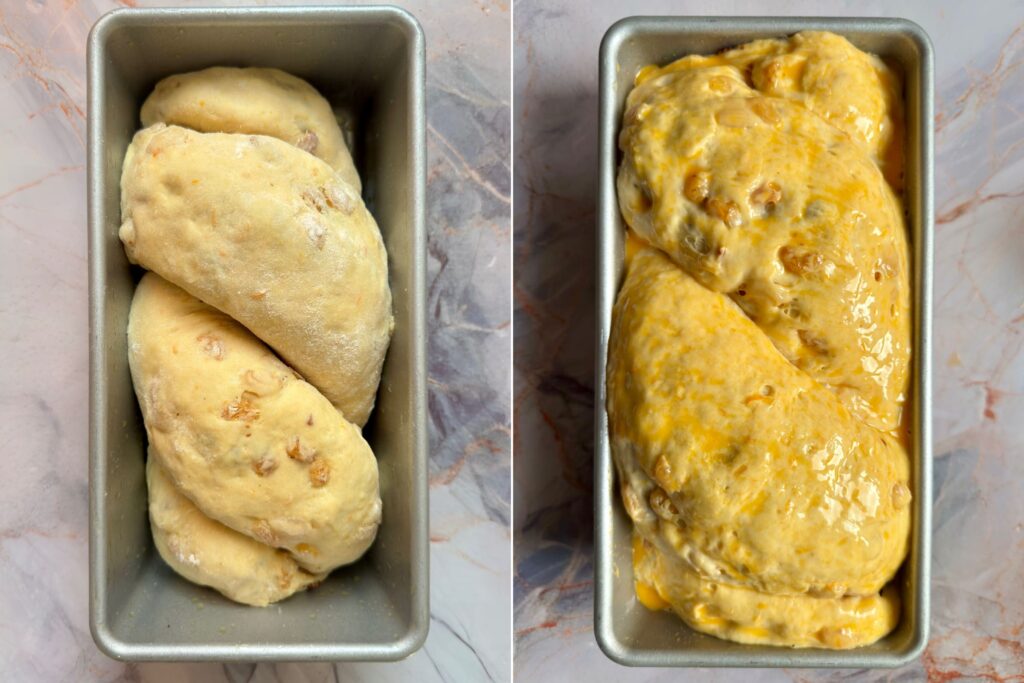
- Rise Time: Place the shaped bread in a greased loaf pan and cover with plastic wrap. Let it rise for about 1-1.5 hours.
- Egg Wash: Remember that third egg yolk we set aside earlier? Now is the time to use it! We are looking for a deep, golden-brown finish, so don’t be stingy—brush it generously over the entire surface of the loaf.
- Cozonac baking Time: My breads take about 35 minutes to bake. If you notice the crust browning too quickly, simply tent the pan loosely with aluminum foil or parchment paper to protect the top while the inside finishes baking.
Step-by-Step Photos
Here are four photos to guide you through each stage of preparing the Cozonac dough:
Here is the dough after the chilling time:
Prepare your fillings:
Gently distribute the walnut filling over the rectangle of dough, then top the Turkish delight evenly across the surface:
Roll up into two logs and shape the bread:
Here are 2 photos showing the dough in the greased 10×5 loaf pan: one before the final rise and one after it has risen and been brushed with the egg wash.
Bake until deep golden brown:
FAQs
How to pronounce Cozonac?
It is pronounced “koh-zo-nahk”.
Is Cozonac the same as Babka?
While they are often made from brioche dough and share a similar shaping process, Cozonac and babka are not the same bread. Cozonac typically features a traditional walnut filling—or sometimes no filling at all—whereas babka is known for a wide variety of flavors, including chocolate, cinnamon, cream cheese, lemon, and vanilla.
Is Cozonac halal?
Not all Cozonac is halal, as many traditional Romanian recipes include rum. However, you can easily make a halal version by following my recipe below—just ensure you omit the rum, brandy, whiskey, and other haram spirits, and use a halal-certified vanilla extract.
Other festive bread Recipes
- Povitica
- Julekake
- Star Bread
- Stollen
- Makowiec
Made this recipe? Share your baking adventure and let me know how it turn by leaving a ★★★★★ star rating and a review below. Be sure to follow me on Pinterest, Facebook, YouTube, and Instagram, and don’t forget to subscribe to my free newsletter!
Romanian Cozonac Recipe
Ingredients
Sponge Starter
- 60 grams (¼ cup) whole milk, warmed to about 110°F (43°C)
- 30 grams (¼ cup) bread or all-purpose flour
- 7 grams (2 and ¼ teaspoons) active or instant dry yeast
Dough
- 160 g/ml (⅔ cup) whole milk, cold
- 10 grams 1 tablespoon lemon zest, zest of 1 large lemon
- 10 grams 1 tablespoon orange zest, zest of 1 large orange
- 2 egg yolks (at room temperature)
- 8 grams (1.5 teaspoons) salt
- 50 grams (½ cup) granulated sugar
- 390 grams (3 and ¼ cups) bread or all-purpose flour, plus more as needed
- 113 grams (½ cup) unsalted butter, at room temperature
Filling
- 3 egg whites
- 2 teaspoons vanilla extract, rum, or brandy
- pinch of salt
- 10 grams (1.5 tablespoons) cocoa powder, sifted
- 20 grams (1.5 tablespoons) confectioners' sugar, sifted
- 210 grams (1 and ½ cup)s walnuts, roasted and chopped
- 210 grams (1 and ½ cups) peanuts, roasted and chopped
- 180 grams (¾ cup) turkish delight
Washing
- 1 egg yolk
Instructions
- Prepare the Sponge: In a small bowl (or the bowl of your stand mixer), whisk together 1/4 cup of warmed milk, 1/4 cup of flour, and the yeast until a thick batter forms. Cover lightly and allow it to rise at room temperature until doubled in size, about 30-45 minutes. This usually takes me about 30 minutes, but keep an eye on it—the timing can vary depending on how warm your kitchen is.
- Prepare the dough: Add the whole milk, egg yolk, salt, lemon and orange zests, sugar, and flour. Using your dough hook attachment, beat on low speed for about 4 minutes until the dough comes together and pulls away from the sides of the bowl. If the dough seems a bit too wet, just beat in more flour—one tablespoon at a time—until it clings to the hook. The dough should be a little shaggy, lumpy, and tacky at the end of this step.
- Knead the dough: Keep the dough in the mixer and beat on medium speed for an additional 6 minutes. If it starts to get too sticky and clings to the bottom of the bowl, just add one more teaspoon of flour at a time until it's soft and only slightly tacky. Once you're done, the dough should feel soft, smooth, and elastic. You can test it by poking it with your finger—if it slowly bounces back, it’s ready for the next step! For extra peace of mind, try the “windowpane test”: tear off a small piece of dough and gently stretch it out. If you can stretch it thin enough for light to pass through without it tearing, you’ve nailed it! If not, just keep kneading for a little longer until it passes the test and is ready for the fat.
- Incorporate the butter: With the mixer running on low speed, add the butter 2 tablespoons at a time. Wait until the dough fully absorbs each addition before adding the next. Use a spatula to scrape the sides to ensure the dough picks up all the butter. If the dough sticks to the bottom of the bowl, don't worry—this is normal. This process takes about 2–3 minutes. Once you've added all the butter, mix on low speed for another 3–4 minutes. By the end, the dough should slap the sides of the bowl and look soft, shiny, and elastic. To finish the dough, toss in the raisins and mix for 2 minutes until the dough evenly incorporates them throughout.
- Refrigerate the dough: Lightly grease a large bowl with butter or nonstick spray. Place the dough in the bowl, turning it to coat all sides evenly. Cover the bowl tightly and refrigerate for at least 2 hours, or up to 24–48 hours.
- Prepare the walnut filling: Beat the egg whites on low speed with a hand mixer until they become frothy and bubbly. Gradually increase to high speed and beat until the mixture is glossy and the peaks stand straight up without drooping. Using a spatula, fold in the vanilla extract, salt, cocoa powder, and confectioners' sugar until fully combined. Add the walnuts and peanuts, then mix again. The filling should be chunky but easy to spread.
- Grease a 10×5-inch loaf pan with nonstick spray or butter.
- Shape the bread: Remove the dough from the refrigerator and turn it out onto a lightly floured surface. Divide the dough into two equal pieces, each weighing about 15–16 ounces (450–460 grams); a bench scraper is helpful for cutting the dough. Working with one piece at a time, roll out the dough into a 9×13 inch (22×33 cm) rectangle using a floured rolling pin. Spread half of the walnut filling gently over the surface and scatter half of the Turkish delight on top. Starting from the long side, tightly roll the dough into a 13-inch log. Pinch the seam and the ends firmly to seal the filling inside. Repeat the process with the second piece of dough. Place one log over the other to form an "X" at the center, carefully wind them around each other toward both ends to create a thick, 9-inch braided rope, and pinch the ends together. Place the loaf into the prepared pan. (See the visuals of this step above.)
- Rise: Loosely cover the shaped Cozonac with plastic wrap and let it rise in a relatively warm environment for 1-1.5 hours. The dough is ready when it looks puffy and has risen roughly 1/2 inch above the rim of the loaf pan.
- Adjust an oven rack to the lower-middle position and preheat the oven to 355°F (180°C).
- Using a pastry brush, gently coat the top of the Cozonac with egg yolk.
- Bake the Bread: Bake for 35–40 minutes until the top is a deep golden brown. To prevent the top from getting too dark, loosely tent the pan with aluminum foil or parchment paper after the first 20–25 minutes. To check for doneness, give the top a gentle tap; if it sounds hollow, it's done. For the most accurate test, the bread is done when an instant-read thermometer inserted into the center of the loaf reads 90–93°F (195–200°C).
- Take the Cozonac out of the oven and let it rest in the pan on a wire rack for 5 to 10 minutes. Carefully turn the loaf out of the pan and transfer it directly to the wire rack; let it continue cooling for at least 1 hour before slicing.
- Cover leftover Cozonac tightly and store at room temperature for 3 days or refrigerated for up to 1 week.