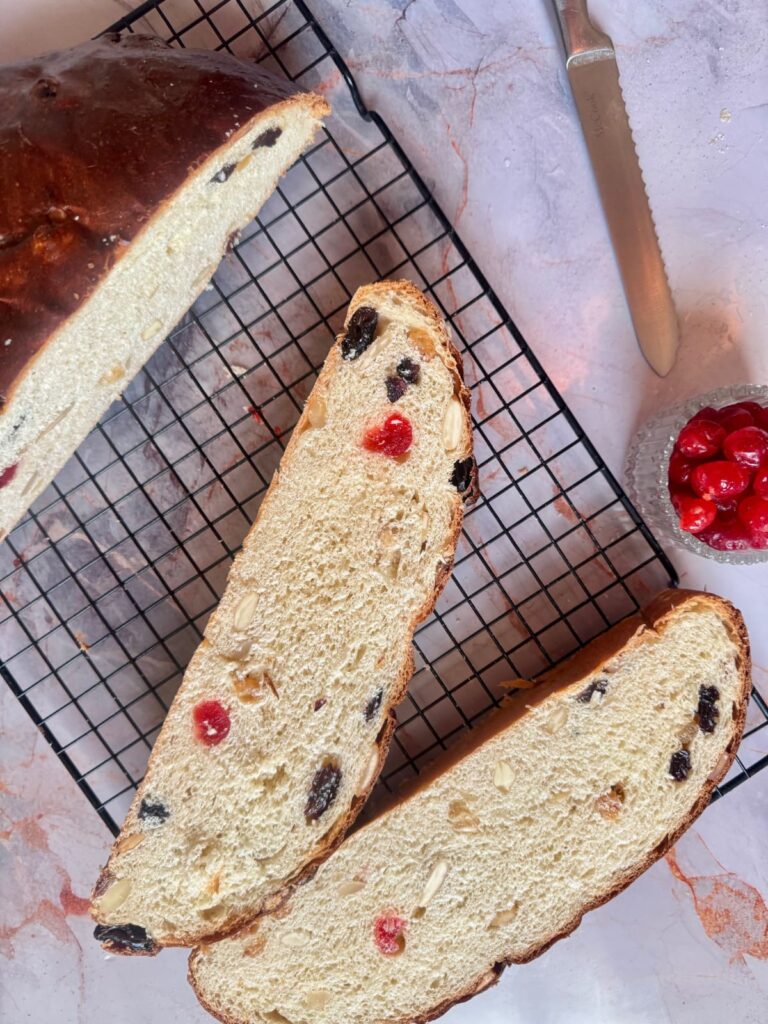
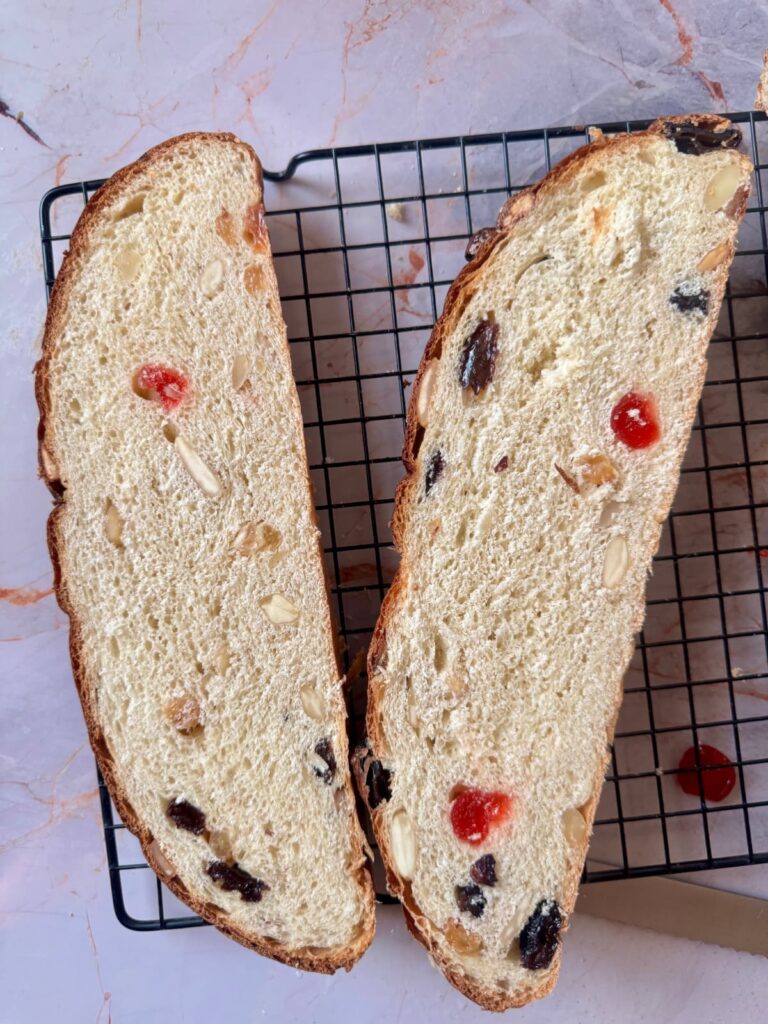
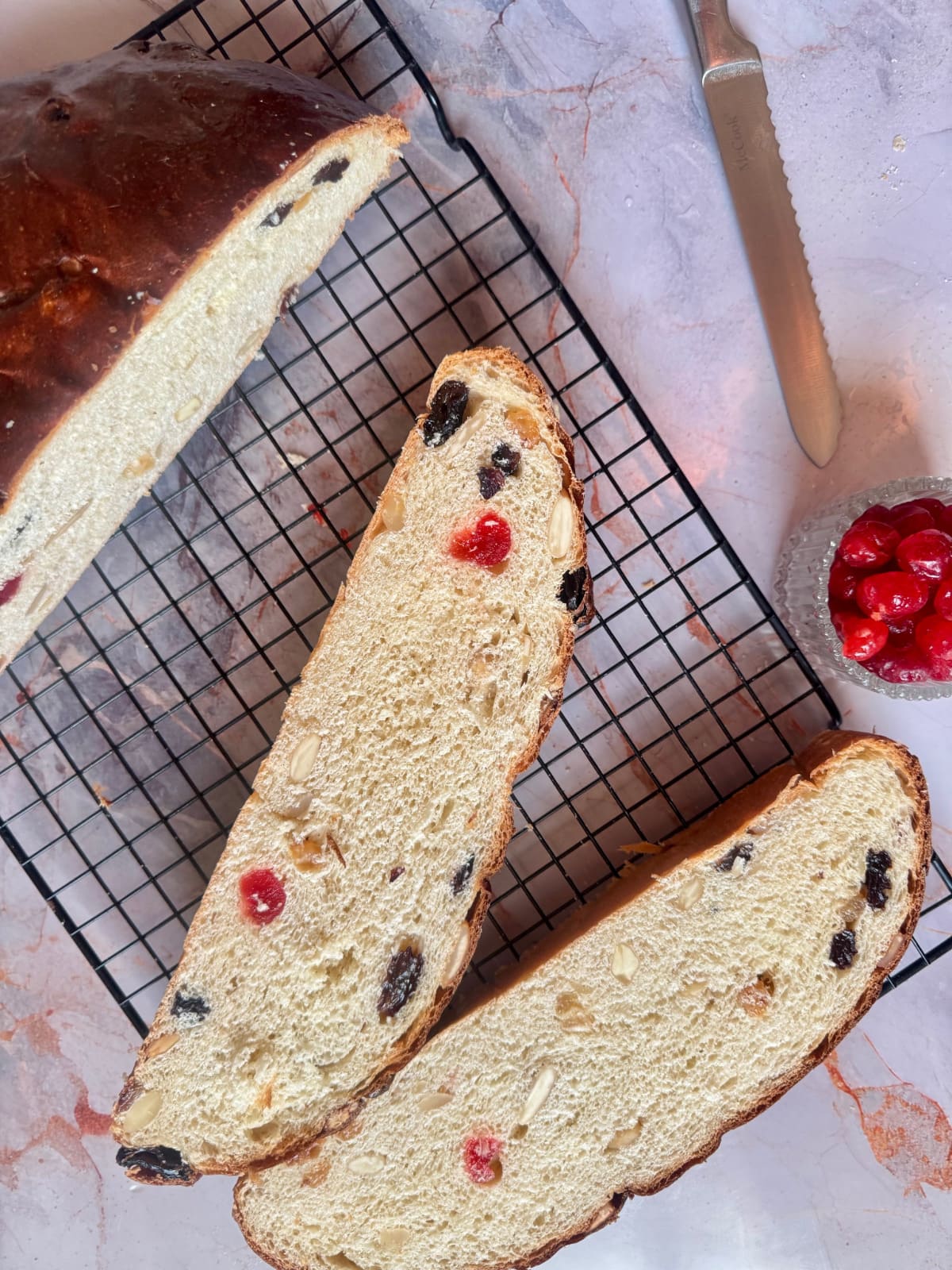
Enjoy a festive Scandinavian treat this Christmas with Julekake, one of the favorite types of sweet bread. This Norwegian Christmas bread looks impressive, but it’s easy to make at home. The secret is a cardamom-rich dough filled with nuts, sultanas, and currants. An egg wash before baking gives the loaf a deep golden-brown, glossy finish.
This post may contain affiliate links. Read our disclosure policy.
What is Julekake?
Norwegian Julekake, also known as Julebrød, is a traditional Norwegian sweet bread made from a rich dough spiced with cardamom and studded with dried and candied fruits, nuts, and sometimes chocolate chips. When I decided to make this homemade version years ago, I looked into its history, and I found that its name is a combination of two words: Jule (meaning Christmas) and kake (meaning cake). Apropos, it is pronounced “YOO-luh-kah-kuh”.
A Christmas Bread Recipe For Beginners
If you are new to baking and feeling nervous about tackling homemade Christmas bread, this recipe is the perfect introduction. Despite its simplicity, the bread absolutely does not skimp on flavor. While it is made from almost the same dough used for more complex Christmas treats like Cozonac and Povitica, this version is incredibly easy to shape and work with. Here are a few key reasons why it is so simple:
- Zero complicated shaping is required
- No kneading is necessary; your mixer does all the work
- 90% of the time is totally hands-off
- Approachable recipe for yeast beginners
- It’s an excellent make-ahead, freezer-friendly recipe
Rich Dough Success Tips
If you’re new to rich dough, this guide to the science of enriched dough provides easy-to-understand techniques, tips, and FAQs.
Ingredients You’ll Need
These are the ingredients that you need to make Norwegian Christmas bread:
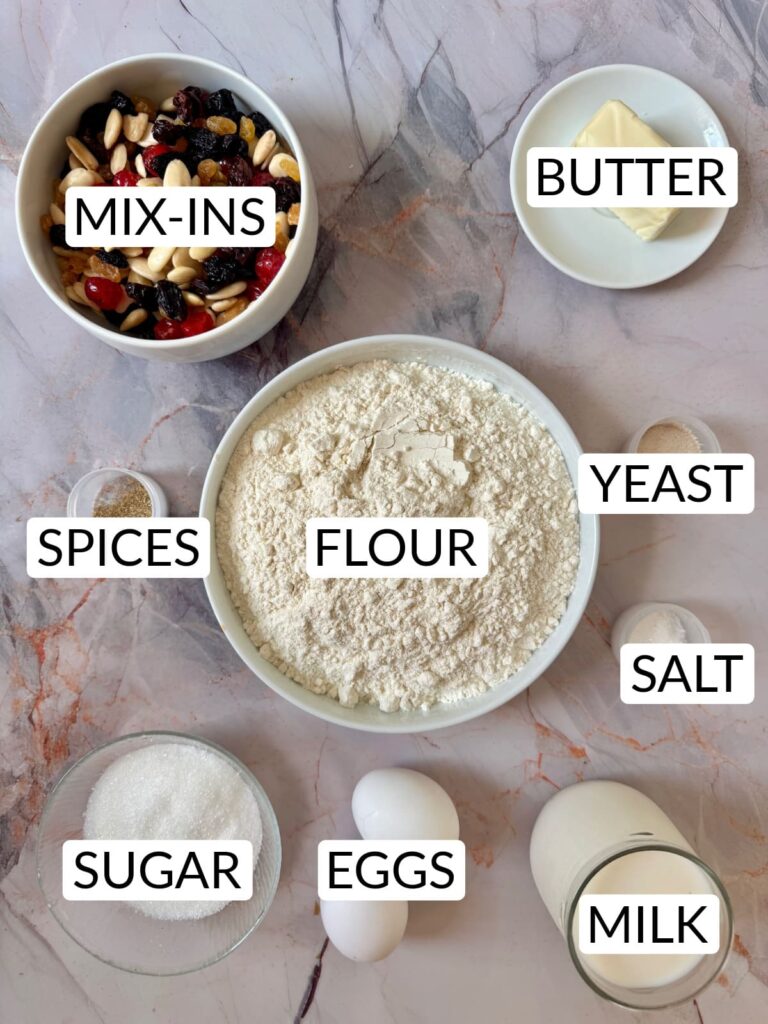
- Milk: For superior flavor and texture, whole milk is the best choice. Low-fat and non-dairy milk will also work, but whole milk produces the best richness and flavor.
- Sugar: Sugar feeds the yeast, increases its activity, and tenderizes the dough. Plus, it adds a subtly sweet flavor.
- Cardamom: You can use cardamom, nutmeg, or both to spice the bread.
- Yeast: You can use instant dry yeast or active dry yeast.
- Egg: Eggs soften and enrich the dough. You will also need an egg for the wash.
- Flour: Bread flour works best for rich dough, but you can also use all-purpose flour. Note that all-purpose flour may require more kneading time.
- Butter: Butter promises a flavorful, soft, tender bread.
- Mix-ins: I use blanched almonds, sultanas, raisins, and dried cherries. Keep reading to choose your ideal mix.
Know Your Ingredients: A guide to the 8 essentials and how they affect.
Choose Your Mix-ins
In this Julekake bread recipe, we follow tradition by using a mix of blanched almonds, sultanas, raisins, and dried cherries.
You can easily adapt your mix-ins to suit your taste! If you prefer not to use certain ingredients (like nuts), simply replace them with an equal amount of something else, such as candied citrus or candied orange, or dark, semi-sweet, or white chocolate. The golden ratio is simple: the total amount of mix-ins should equal the amount of flour.
In Photos: How to Make Julekake
Start by whisking the warm milk, sugar, and spices together directly in the bowl of your stand mixer (or a separate large bowl). Add the yeast, whisk to combine, and set the mixture aside to activate. This takes about 10 to 15 minutes. The mixture is ready for the next step once it looks visibly foamy and frothy.
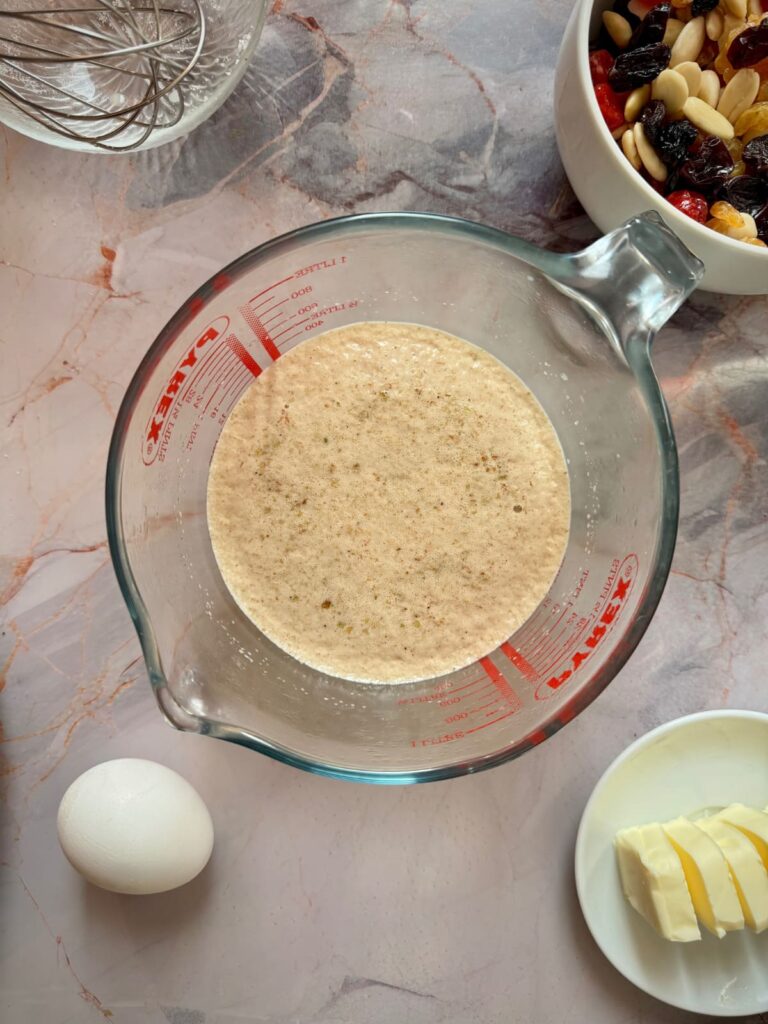
After the yeast is active, whisk in the egg, and pour the mixture into the bowl of your stand mixer if you previously mixed it in a separate bowl. Add the flour and salt. Attach the dough hook to your stand mixer and combine on low speed until a rough, shaggy dough has formed, then knead until the dough is soft, smooth, and elastic.
Once the gluten is well-developed and the dough is elastic, begin adding the softened butter. Drop in one small piece at a time, ensuring you do not add the next piece until the current one is completely blended into the dough—this is key for proper enrichment. This process takes approximately 2 to 3 minutes. Once all the butter is fully incorporated, continue mixing for an additional 3 minutes.
Tip: Mastering enriched dough takes practice! If you need extra help with this technique, see my detailed guide for more information.
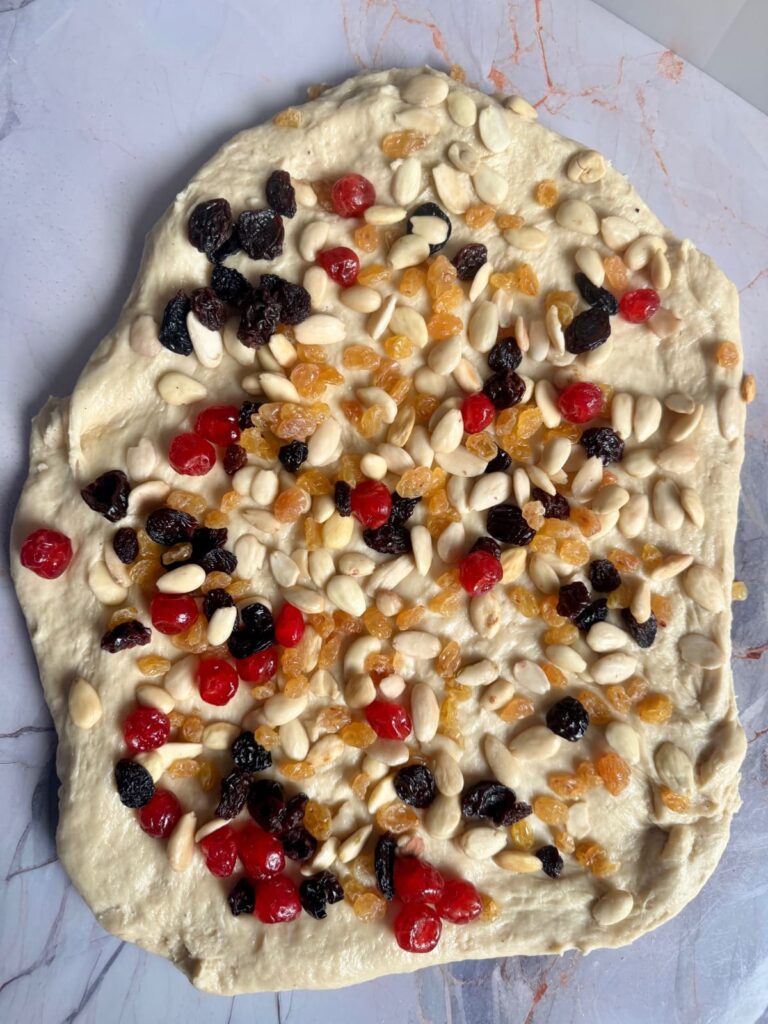
Transfer the kneaded dough to your work surface. Roll and stretch the dough into an approximate 10 x 25-inch rectangle. Don’t worry about making the dimensions absolutely perfect! Once stretched, sprinkle your prepared mix-ins evenly across the surface of the dough.
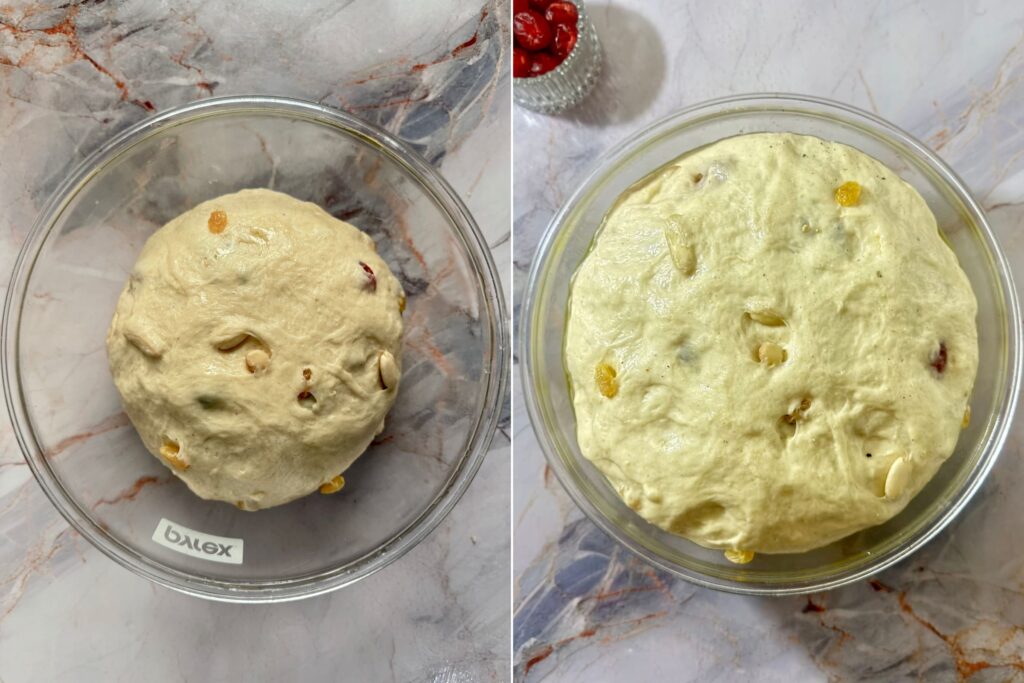
Cover the dough and let it rise in a warm place for about 1.5–2 hours.
Gently punch down the risen dough to release the gases. Turn the dough out onto a lightly floured work surface. Work the dough briefly to form it into a tight, smooth 7-inch round loaf. Place in the prepared baking pan.
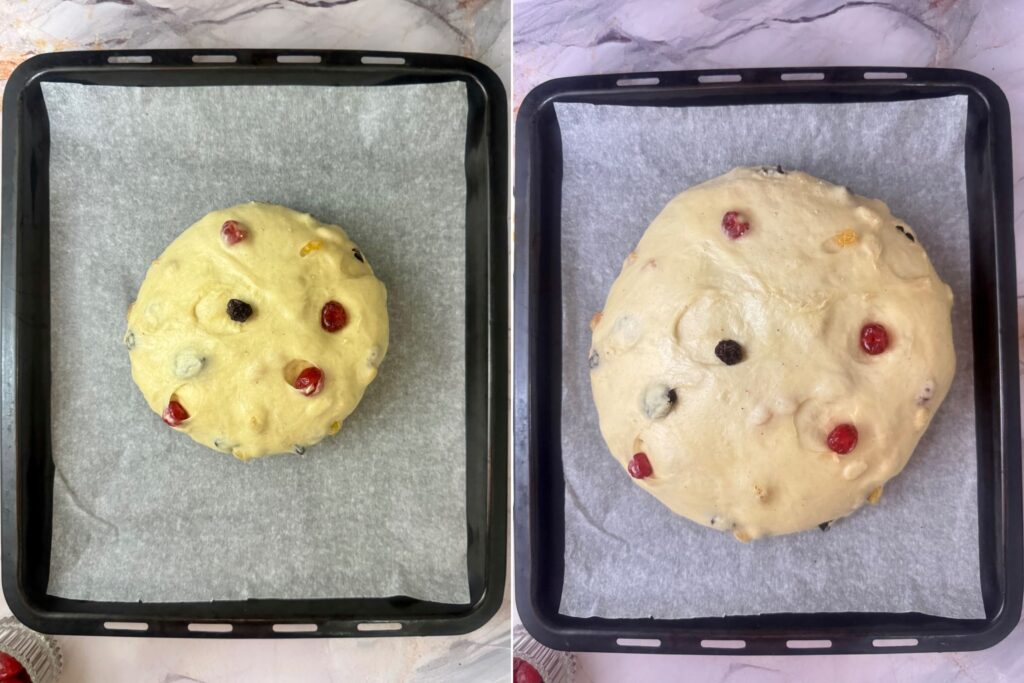
Cover the shaped loaf loosely and allow it to rise again for at least 1 hour. Immediately before baking, use a pastry brush to apply the egg wash to the top of the bread.
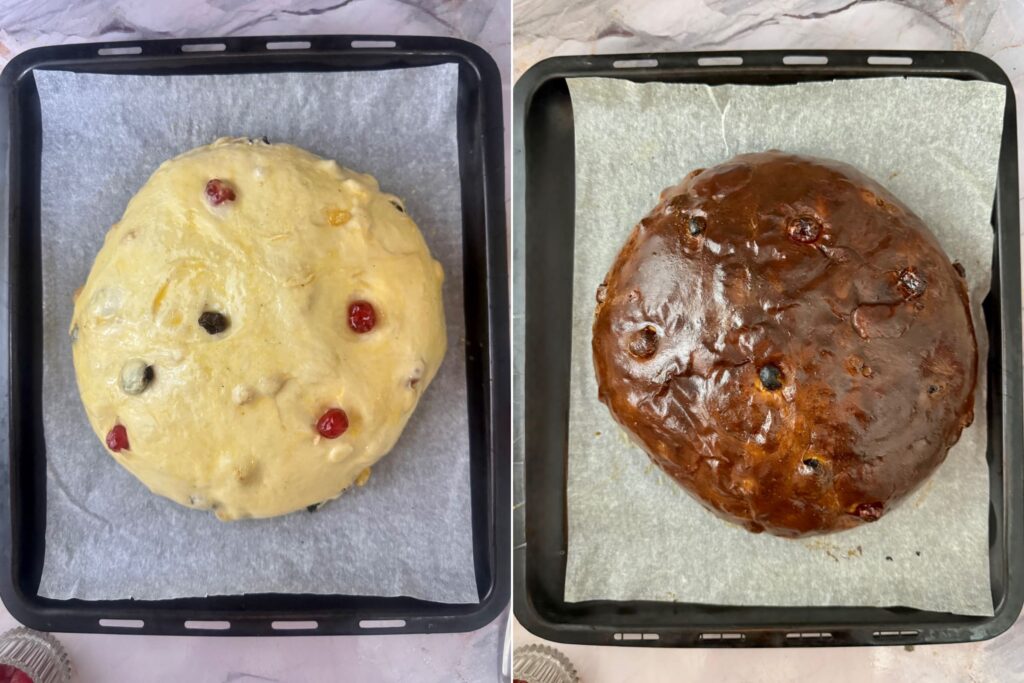
Bake for just half an hour.
Made this recipe? Share your baking adventure and let me know how it turn by leaving a ★★★★★ star rating and a review below. Be sure to follow me on Pinterest, Facebook, YouTube, and Instagram, and don’t forget to subscribe to my free newsletter!
Norwegian Julekake Recipe
Ingredients
- 1 and ¼ cups (280 ml/g) whole milk, warmed to about 110°F (43°C) (about )
- ½ cup (100 grams) granulated sugar
- 1 teaspoon (3 grams) ground cardamom
- 2 and ¼ teaspoons (7 grams) instant or active dry yeast
- 1 medium egg
- 4 cups (480 grams) bread or all-purpose flour, plus more as needed
- 1 and ½ teaspoon (9 grams) sea salt
- ¼ cup (56 grams) unsalted butter, at room temperature
- ¾ cup (120 grams) blanched almonds
- ¾ cup (120 grams) sultanas (golden raisins)
- ¾ cup (120 grams) currants (black raisins)
- ¾ cup (120 grams) dried cherries
- For washing: 1 beaten egg
Instructions
- Prepare the dough: In the bowl of your stand mixer fitted with the dough hook attachment, whisk together the warm milk, sugar, and cardamom. Add the yeast and whisk to combine. Cover the bowl and let the mixture rest for 10–15 minutes, or until it turns foamy and frothy on top.
- Stir in the egg, then add the flour and salt. Beat on low speed for about 4 minutes until the dough comes together. Pause to scrape down the sides of the bowl with a silicone spatula or bowl scraper to ensure everything is fully incorporated. By the end of this step, the dough should pull cleanly away from the bottom of the bowl and gather around the dough hook. If it doesn’t, add 1 tablespoon of flour at a time until it does. Avoid adding more flour than necessary—you don’t want a dry dough.
- Knead the dough: Switch the mixer to medium speed and knead for 5–6 minutes, stopping twice to scrape the dough hook so everything kneads evenly. If the dough becomes too sticky and clings to the bottom of the bowl, add 1 teaspoon of flour at a time until it forms a soft dough. Don’t add more flour than necessary—you want a supple dough, not dry dough. The dough is ready when it’s soft, smooth, and elastic. Gently press it with your fingertip; if the dent slowly springs back, you’re ready to move to the next step. If not, knead in 1-minute intervals and test again. You can also use the windowpane test here.
- Incorporate the fat: Switch the mixer back to low speed. Add the butter one piece at a time, waiting for each piece to fully incorporate into the dough before adding the next. This takes about 2–3 minutes. If you see butter clinging to the sides of the bowl, stop and scrape it down (New to enriched dough? See my Master the Science of Enriched Dough guide for tips). Once all the butter is incorporated, continue mixing on low for another 3 minutes. The dough should look smooth, supple, and lightly sticky.
- Lightly flour your work surface and turn the dough onto it. Stretch the dough into a 10×25-inch rectangle (they don't have to be perfect). Sprinkle the blanched almonds, sultanas, raisins, and dried cherries on top. Fold the edge onto the center, and gently turn the dough so the fruit and nuts stick throughout.
- 1st Rise: Lightly grease a large bowl with butter or non-stick spray. Shape the dough into a ball. Place it in the bowl and turn it to coat all sides. Cover the bowl tightly and allow the dough to rise in a relatively warm environment until doubled in size, about 90-180 minutes. Enriched dough rises slowly—be patient.
- Line a half sheet pan with parchment paper, or lightly grease it with nonstick spray or butter.
- Shape the bread: Once the dough has risen, gently punch it down to release the air. Lightly flour your work surface and hands. Turn the dough out onto the work surface and shape into a 7-inch round loaf. Place it on the prepared baking sheet.
- 2nd Rise: Loosely cover the shaped Julekake dough. Allow to rise in a relatively warm environment until it reaches about a 9-inch round ball, at least 60–90 minutes.
- Preheat the oven to 340°F (170°C).
- Lightly brush the risen bread dough with a beaten egg.
- Bake the bread: Bake for 30–35 minutes, or until the top is a deep golden brown. The top of Julekake bread browns quickly, so I recommend loosely tenting it with aluminum foil or parchment and rotating the baking sheet halfway through.
- Remove from the oven and immediately place the hot bread in a wire rack. Allow to cool at least 30 minutes before slicing and serving.
- Cover leftover Julekake tightly and store in a plastic bag at room temperature for 3 days, or in the refrigerator for up to 1 week.