
This homemade Lepinja bread is simple to prepare, perfectly follows the traditional method, and only needs a handful of basic pantry staples to get started! With its thin, soft exterior and airy, hollow interior, this make-ahead-friendly recipe is one you’ll return to time and again. Take a look at the full post and the step-by-step photos below to make sure you succeed with this Balkan flatbread recipe.
This post may contain affiliate links. Read our disclosure policy.
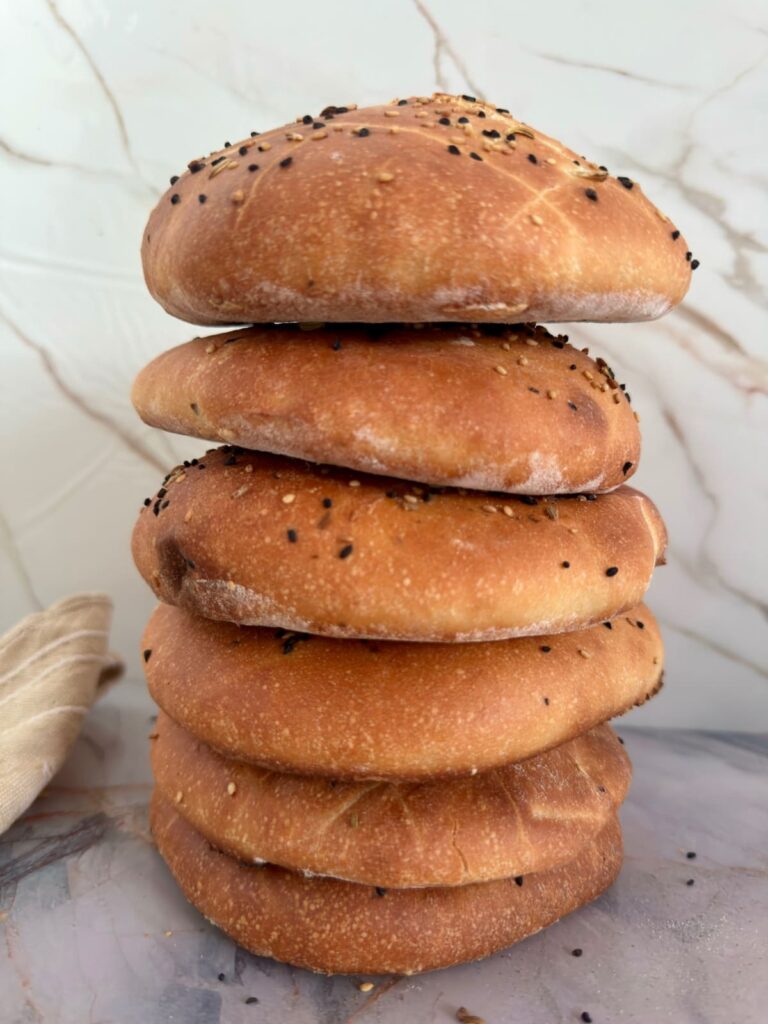
There is nothing quite like fresh Mediterranean flatbreads served warm from the oven or skillet. If you have tried my Turkish Bazlama, Pita bread, or Piadina Romagnola, you know exactly what I mean!
The combination of a thin, soft, golden-brown exterior and a light, airy, hollow interior makes this flat bread perfect for stuffing with Cevapi, spreading with creamy Kajmak, or scooping up flavorful Ajvar. With that kind of versatility, it’s no wonder this Lepinja bread is one of my absolute favorites to bake.
What is Lepinja (Somun)?
Although its history dates back to the Ottoman Empire and the Middle East, Lepinja bread is now most popular throughout the Balkans, especially Bosnia and Herzegovina and Serbia, where it remains a staple of local cuisine and one of the most beloved breads in the region.
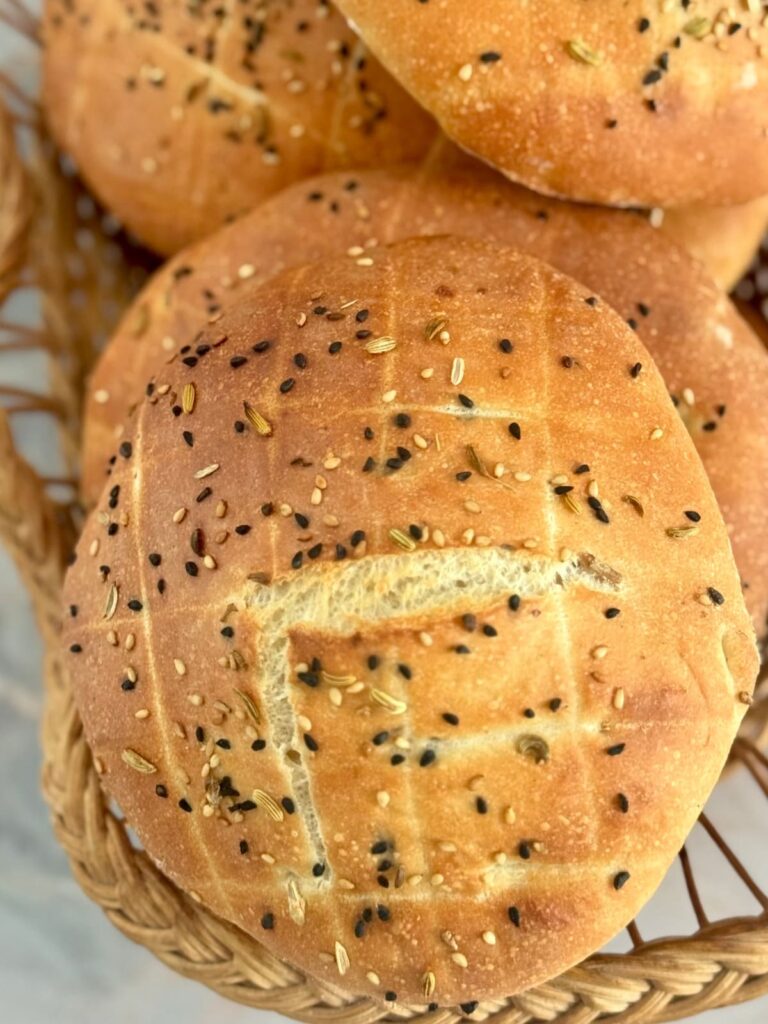
To Know: Though they share similar ingredients and dough preparation methods, Lepinja and pita are not the same. Unlike pita, Lepinja is typically marked with a grid pattern, often topped with seeds, and always baked in the oven. In contrast, pita is simpler and can be baked in either the oven or on a skillet.
Why You’ll Love This Recipe
- Prepared just as tradition calls
- Made with basic ingredients you likely already have on hand
- A pillowy-soft crust with a spacious, pocket-like interior that is wonderfully light and airy
- Incredibly versatile: Ideal for sandwiches, dipping, or scooping…
- Make-Ahead & Freezer Friendly
Grab These Ingredients
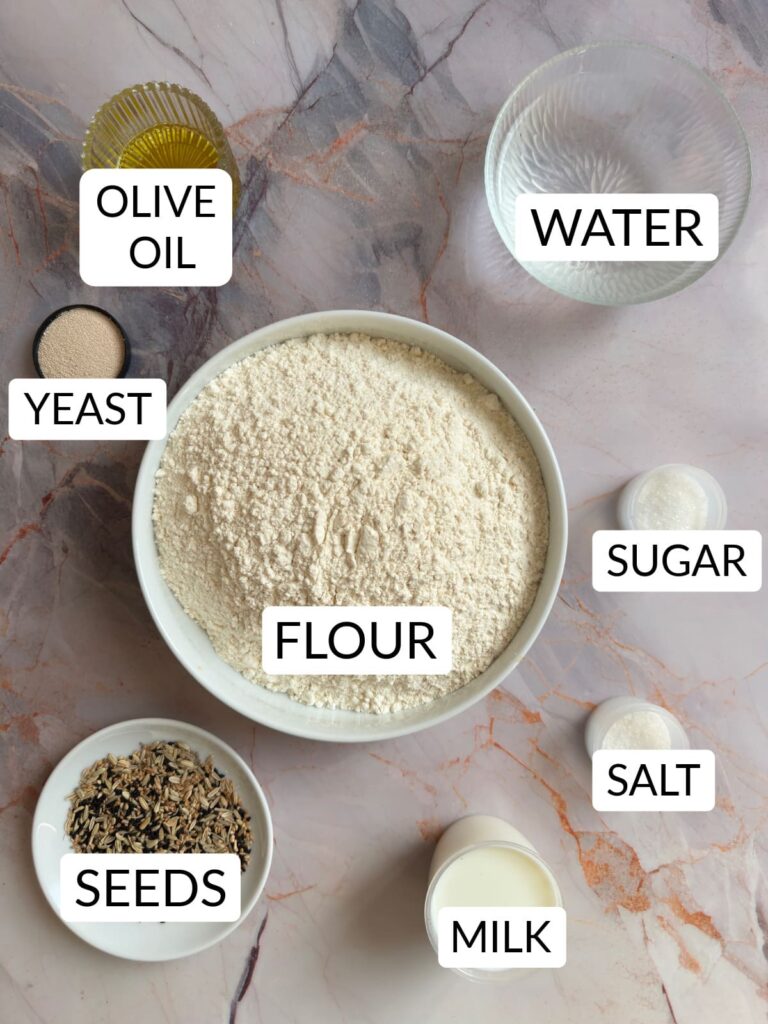
- Liquids: Warmed water and milk are used for the dough, plus a small amount of extra milk for the wash.
- Yeast: Let the dough rise. You can use either instant or active dry yeast.
- Sugar: Sugar boosts yeast activity for a better rise and functions as a natural tenderizer for the dough.
- Flour: Both bread flour and all-purpose flour work well for this recipe. Bread flour will give you a slightly chewier texture, while all-purpose flour results in a softer bite.
- Salt: We can’t make flavorful bread without it.
- Olive Oil: Two tablespoons of extra virgin olive oil complement and enhance the flavor of this Somun bread.
- Seeds: I use a mix of white and black sesame seeds along with fennel seeds.
Related: Essential Bread Ingredients and Their Roles.
In Photos: How to Make Authentic Bosnian Lepinja
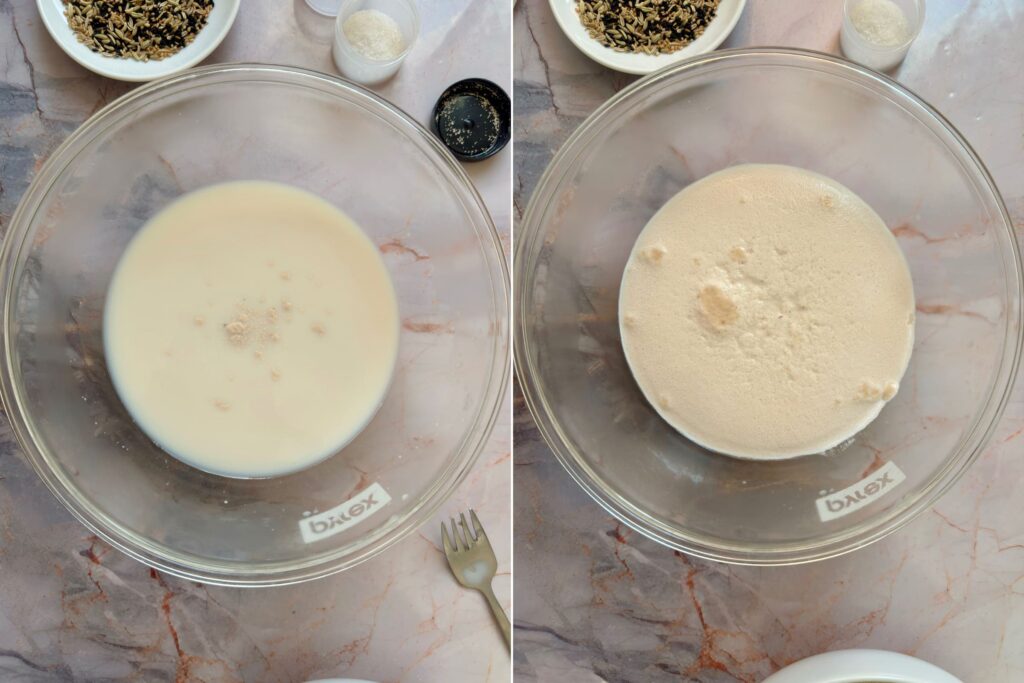
This recipe starts with lukewarm water and milk. First, heat the liquids together in a single saucepan to about 110°F (43°C); there is no need to use separate pans. Pour the liquid into a large mixing bowl, followed by the yeast and sugar. Whisk together, cover the bowl, and wait for about 10–15 minutes until the mixture becomes bubbly and foamy. If you are new to baking and aren’t sure what foamy yeast looks like, these two photos show exactly how the mixture looks before and after the yeast has foamed up:
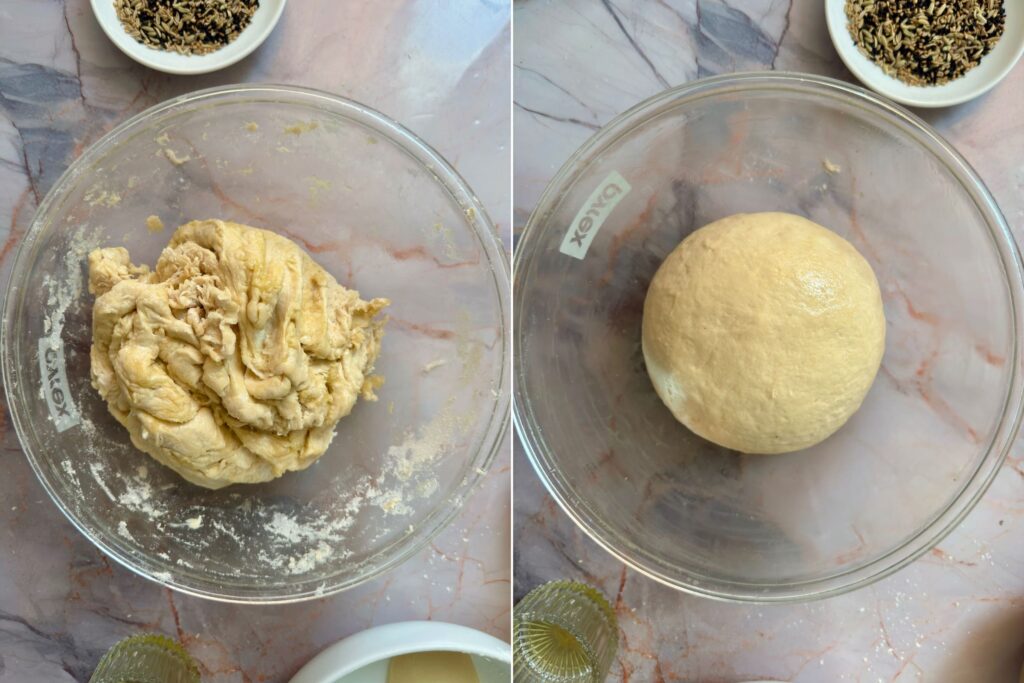
Get your remaining ingredients ready. You can use a stand mixer fitted with a dough hook, but I personally prefer to keep things simple in all my flatbread recipes by using a large mixing bowl and a dough whisk. Add the flour and salt, mixing for 3–4 minutes until a shaggy mass forms (below left). Add the oil at the very end of this step to help incorporate any bits of dough stuck to the sides of the bowl. Transfer the dough to a lightly floured surface and knead until it becomes smooth, elastic, and supple (below right).
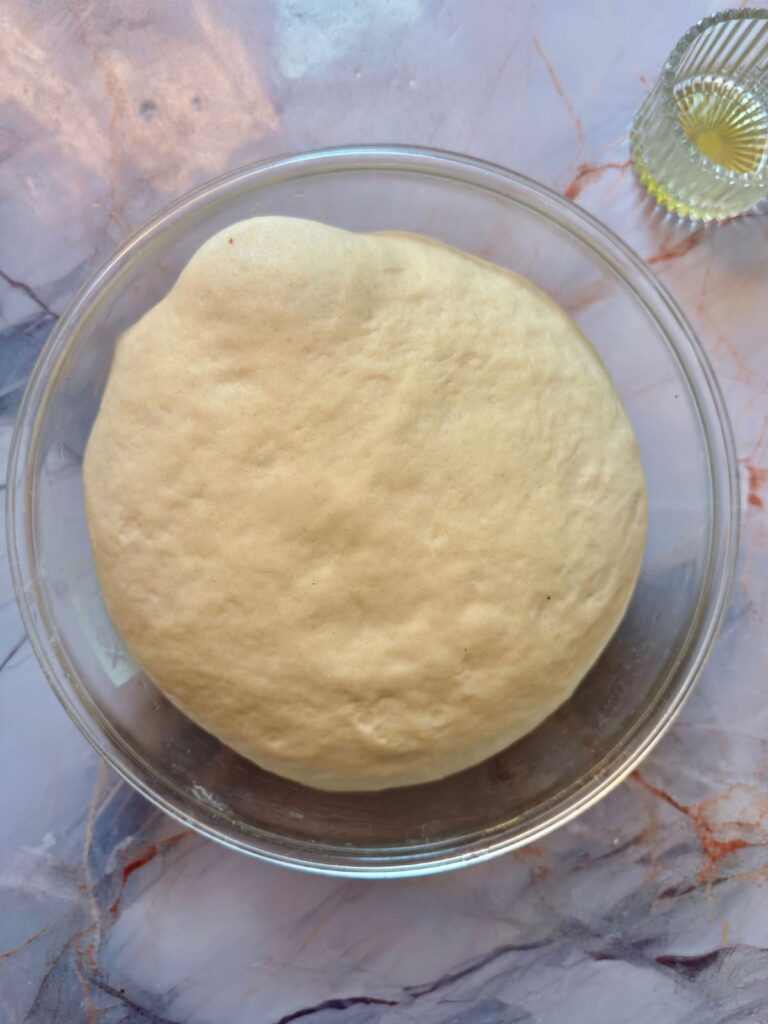
Set the dough aside to rise until doubled in volume.
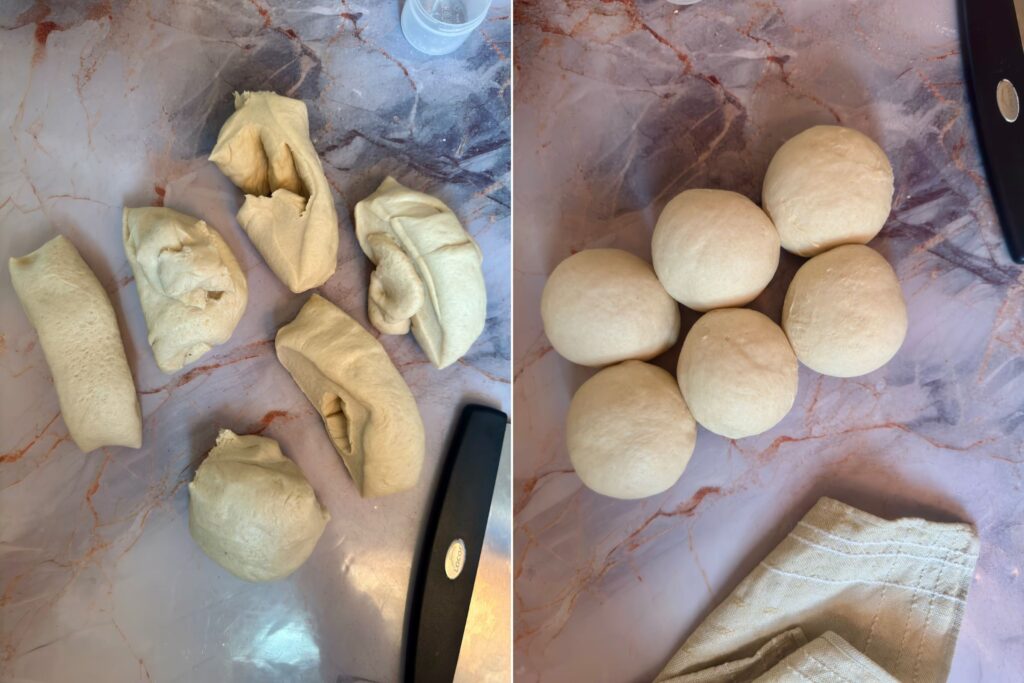
Punch the dough down to release the air, then place it on a lightly floured work surface and divide it into 6 equal pieces (below left). Shape each piece into a smooth dough ball and cover them with a clean kitchen towel to rest for 10–15 minutes (below right).
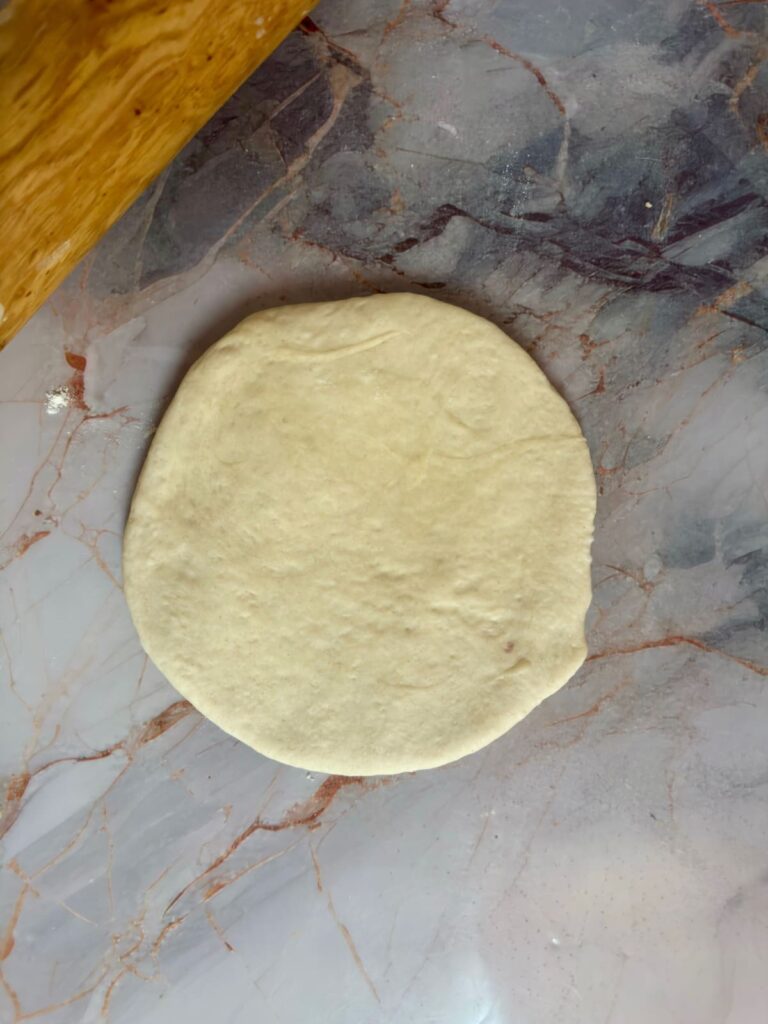
Working with one dough ball at a time while keeping the rest covered. flatten and press out one into a circle about ¼ to ½-inch thick:
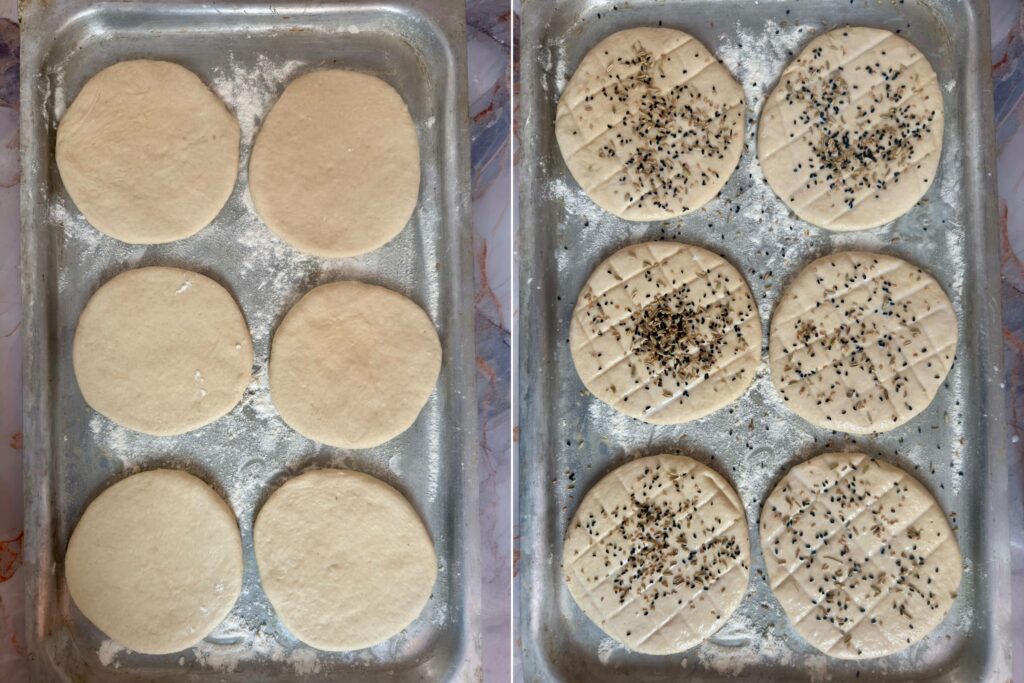
Place the shaped flatbreads on a large, floured baking sheet (below left). Use a bench scraper to mark the tops with 4×4 parallel lines to create a diamond pattern, then brush the tops with milk and sprinkle with seeds (below right).
Bake until golden brown:
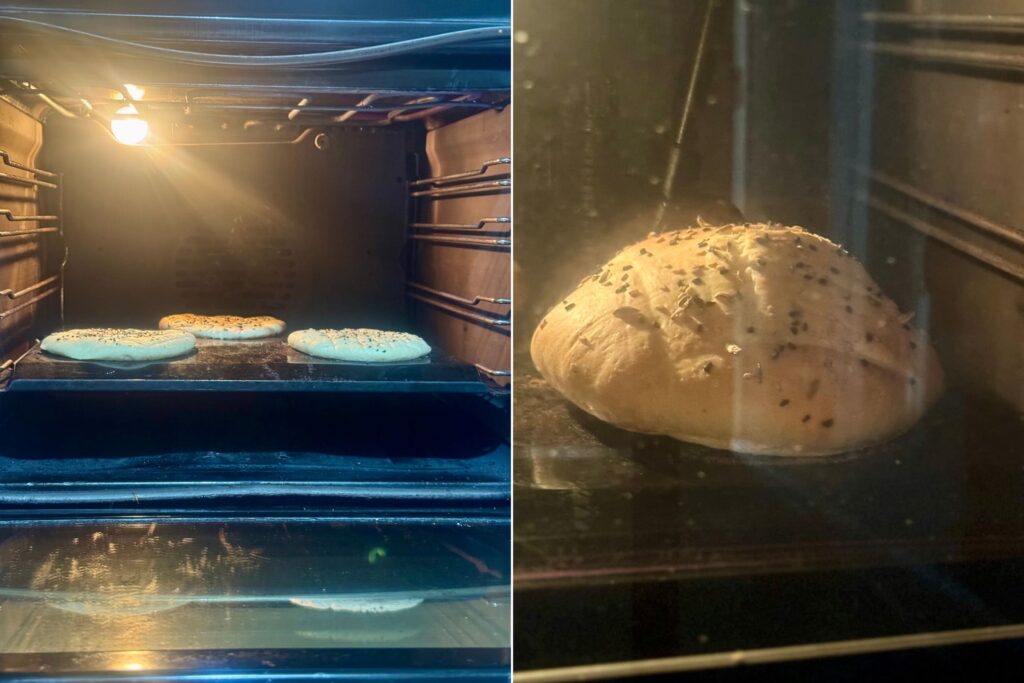
How to test for doneness? Give one loaf a light tap from the bottom. If it sounds hollow, it’s done.
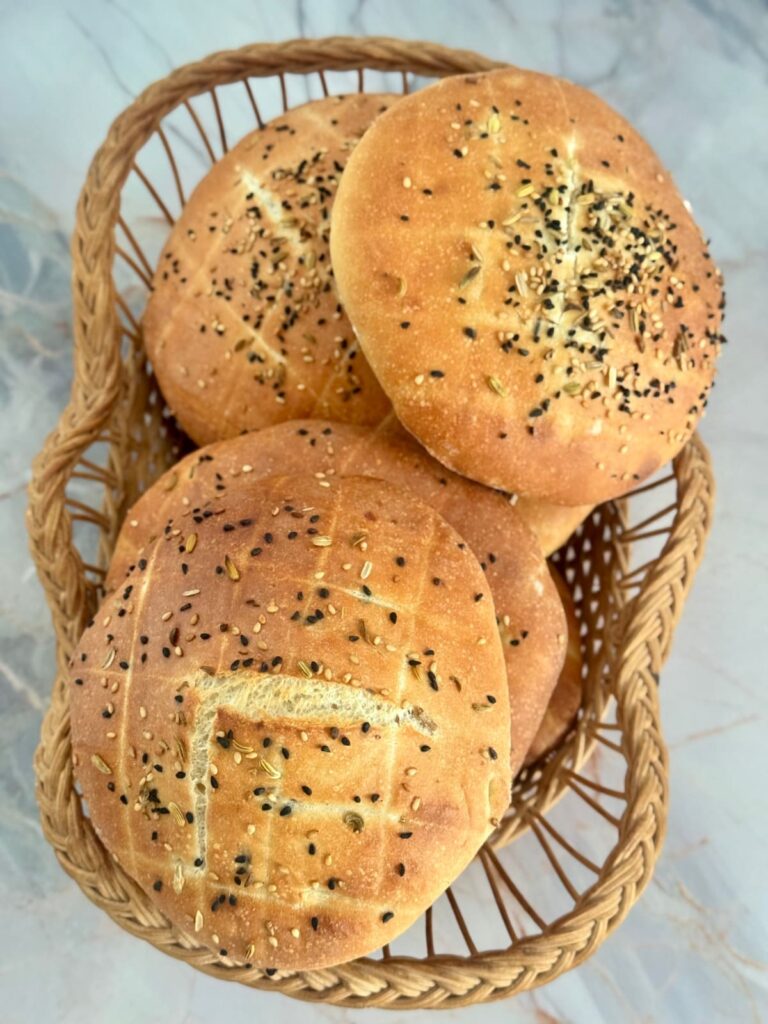
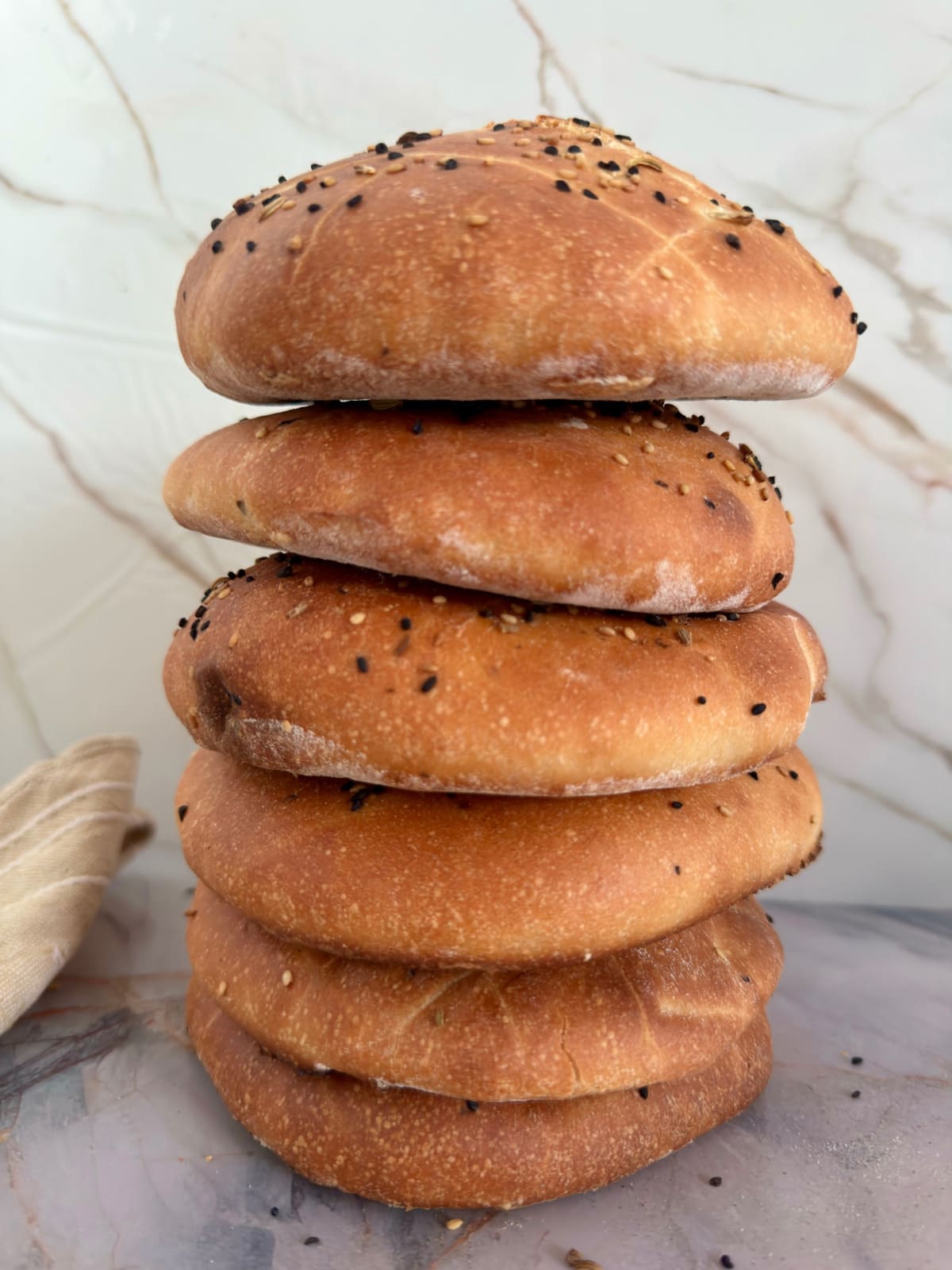
This bread from the Balkans is phenomenal when stuffed and served warm. The exterior is slightly chewy with a beautiful golden crust, while the interior is soft, airy, and pocket-like.
Baker Tips for Perfect Lepinja
- Check Your Yeast: Ensure your yeast is active by whisking it into the warm liquid before starting—this step is worth it even when using instant yeast.
- Flour, Don’t Grease: Avoid greasing your baking sheet for the second rise. Instead, dust it generously with flour. This prevents the dough from sticking to the pan during baking.
- Preheat the Tray: Preheat your oven with a baking sheet placed upside-down inside for at least 30 minutes before baking.
- Bake in Batches: Bake your flatbreads in 2 or 3 separate batches. This allows the heat to distribute evenly in the oven, which helps the bread rise and bake perfectly.
Other Flatbread Recipes
Made this recipe? Share your baking adventure and let me know how it turn by leaving a ★★★★★ star rating and a review below. Be sure to follow me on Pinterest, Facebook, YouTube, and Instagram, and don’t forget to subscribe to my free newsletter!
Lepinja (Somun Bread)
Ingredients
Dough
- ¾ cup (180 ml/g) water, warmed to about 110°F (43°C)
- 7 tablespoons (100 ml/g) milk, warmed to about 110°F (43°C)
- 2 and ¼ teaspoons (7 grams) instant or active dry yeast
- 1 tablespoon (12 grams) sugar
- 4 cups (480 grams) all-purpose flour or bread flour, plus more as needed
- 1 and ½ teaspoons (9 grams) salt
- 2 tablespoons (25 grams) olive oil
Toppings
- 1 and ½ tablespoons milk
- 1 teaspoon sesame seeds
- 1 teaspoon black sesame seeds
- 1 teaspoon fennel seeds
Instructions
- Prepare the dough: Whisk together the warm water, warm milk, yeast, and sugar in a large bowl. Cover and allow to sit for 10-15 minutes or until bubbly and foamy on top.
- Add the flour and salt to the yeast mixture. Combine all the ingredients together with a silicone spatula, wooden spoon, or dough whisk for 3-4 minutes or until a shaggy mass forms. Mix in the olive oil until it is fully incorporated (this will help pick up any flour remaining on the sides of the bowl). *If you own a mixer and want to save your arm muscles from kneading, you can do this with your stand mixer fitted with a dough hook at low speed and in the next step, knead the dough at medium speed.
- Knead the dough: Transfer the dough onto a lightly floured surface and knead for 7–8 full minutes, or keep the dough in the mixer and knead at medium speed for an additional 7–8 minutes. If the dough feels too dry and seems impossible to knead, add 1 teaspoon of water at a time to the dough or the mixer bowl until it becomes smooth, elastic, and supple. If the dough is too sticky, sprinkle in 1 teaspoon of flour at a time. Do not add more liquid or flour than necessary, as you want to avoid a dough that is too dry or overly sticky. After kneading, the dough should feel soft. Poke the dough with your finger—if it slowly bounces back, it is ready to rise. If not, continue kneading for another minute.
- 1st Rise: Lightly grease a large bowl with oil or nonstick spray. Shape the dough into a ball and place it in the bowl. Turn the dough over to coat all sides in the oil. Cover and let the dough rise for 60–90 minutes, or until doubled in size.
- Shape the bread: When it is ready, punch down the dough to release the air, then transfer the dough to a lightly floured work surface. Divide the dough into 6 equal pieces, each weighing about 130 grams. Shape each piece into a smooth ball (a bench scraper is always helpful for cutting and shaping the dough). Arrange the balls on your work surface and cover them for 10-20 minutes; this relaxes the gluten and makes the dough balls much easier to roll out.
- Dust an extra-large baking sheet with flour. Do not oil your baking sheet, as the flour prevents Lepinja dough from sticking to the pan during the baking process.
- Take one ball at a time and keep the rest covered to prevent them from drying out. Gently press the dough out with your hands or fingertips into a circle that is ¼ to ½-inch thick (You can also use a rolling pin, but pressing by hand preserves more air bubbles, making the texture lighter. I have tested both methods, and both work successfully). Place it onto the prepared extra-large baking sheet. Repeat this process with the remaining dough balls.
- Use a bench scraper or kitchen knife to press 4 parallel horizontal lines into the top of each dough circle. Rotate the bench scraper and press another 4 parallel horizontal lines to create the traditional diamond pattern (refer to the photos as a guide for this step). Brush the top of each dough circle with milk and sprinkle with seeds.
- 2nd Rise: Cover the shaped Lepinja dough with plastic wrap or a clean kitchen towel. Allow the dough to rise for about 30 minutes or until it looks puffy. To check the rise, gently and quickly press your finger into the side of the dough about 1/2 inch (1 cm) deep, then immediately pull it away. If the indentation fills back slowly, the dough is ready to bake.
- Place the oven baking sheet upside-down in the lowest oven position. Preheat to 482°F (250°C) using conventional heat for at least 30 minutes.
- Bake the bread: Working in two batches, place three Lepinjas directly onto the hot, upside-down baking sheet. Bake for 7–8 minutes until they puff up and turn a beautiful golden brown on top. Start checking your bread at the 6-minute mark to prevent over-baking. Remove from the oven and immediately cover the baked Lepinjas with a clean kitchen towel (This traps the steam and ensures the crust stays soft and pillowy while you bake the rest). Repeat the process with the three remaining dough circles.
- Lepinjas are best eaten the day they are baked. However, you can store leftovers in an airtight container at room temperature for up to 2 days.


Hello, can I use a frying pan to cook it instead of the oven? Thank you.
Technically, you can cook Lepinja dough in a pan just like we do when cooking pita bread. But for authentic results, I recommend sticking to the oven.
My somun turned out great! I only had one trouble. My dough felt a bit dry, so I added a little extra water to soften it. Thank you for the recipe!